We love pasta and we love meatballs, too. We already got a tried and tested spaghetti meatballs recipe but it doesn't stop us to be always on the lookout for any decent meatballs recipe out there in the world. So it's normal that we try out this much vaunted recipe from the Epicurious website that's got a very high review rating from readers. They were right! Only a few adjustments in the recipe and it's all thumbs up from the whole family. The recipe is humongous. Probably enough to feed a horde of people for a party. So I promptly halved and reduced volume and spice proportions and it scaled down well.
Spaghetti and Meatballs
*For the meatballs:
750 g minced beef
250 g minced pork
1 1/2 cups torn day-old Italian bread (or any white bread)
1 cup whole milk
1 medium onion - chopped
2 Tbsp extra-virgin olive oil
5 garlic cloves - finely chopped
3 large eggs
60 g [about 1 cup] parmesan cheese - grated
3 Tbsp finely chopped fresh flat-leaf parsley
2 Tbsp finely chopped fresh oregano (or 1/2 tsp dried)
1/2 Tbsp grated lemon zest
2 1/2 tsp fine sea salt
1/2 tsp ground black pepper
1/2 cup vegetable oil (for frying)
*For the tomato sauce:
6 x 400 g cans of chopped or plum tomatoes
1 medium onion - chopped
3 garlic cloves - finely chopped
3 Tbsp extra-virgin olive oil
2 tsp fine sea salt
1/2 tsp ground black pepper
1 kg dried spaghetti
*To make tomato sauce:
- In a large pot, heat the olive oil and cook the onions in medium heat until soft - about 5 minutes.
- Add the garlic and cook until softened - about a further 2 minutes.
- Add the rest of the ingredients, bring to a boil then lower heat and simmer uncovered stirring occasionally until thickened - about 45 minutes to 1 hour.
- Midway through cooking, you can crush the whole tomatoes with a spatula or stick blender.
*To make meatballs:
- Fry the onions in a wide frying pan on medium heat. Cook until softened while stirring occasionally - about 5 minutes.
- Add garlic and cook while stirring occasionally until fragrant and softened - about 2-3 minutes. Transfer to a bowl and cool completely.
- Soak bread in milk for about 20 minutes or until soft. Squeeze the bread firmly to remove excess milk. Discard excess milk.
- In a large bowl, combine all the ingredients except for the vegetable oil. Mix with your hands just until combined - do not overmx.
- Form into balls about 28 g (1 oz) in weight or about 1 1/2-inch in diameter.
- Heat vegetable oil in the same pan used with the onion and fry the meatballs in batches without crowding until browned all over - about 5 minutes each batch.
- Add fried meatballs into the tomato sauce and simmer for about 30 minutes.
- Cook spaghetti according to instructions in the packet.
- Serve spaghetti with meatballs and sauce with the optional grated parmesan cheese on top.
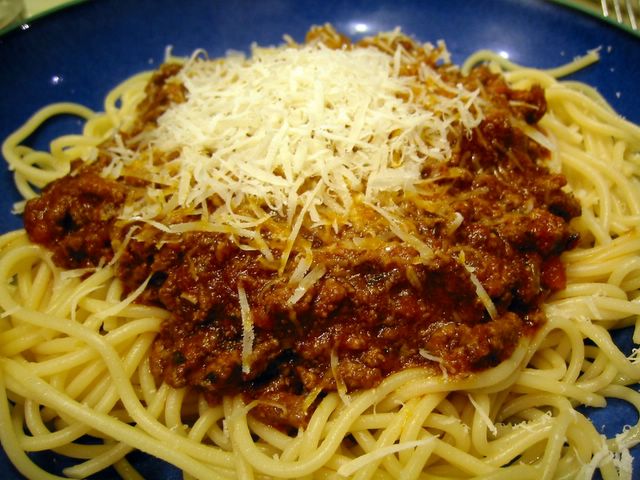
My kids are such pasta fans that we cook Italian-style spaghetti bolognese almost every week. After several years, our version of the recipe has evolved from the usual elaborate one I used to do to this most basic recipe that we use week in, week out. With this one, I just throw in whatever is available. Sometimes it's all chopped tomatoes and no passata, sometimes it's red wine or none at all, most of the time there are no chicken livers or I forget to add Worcestershire sauce. Other times there are even no carrots nor celery. It's quite versatile such that most ingredients are optional. And you can tweak it as much as you like as long as there is that mandatory ingredients of minced meat and tomatoes (of whatever form).
Spaghetti Bolognese
1 kg minced beef (or 3/4 beef, 1/4 pork in proportion)
1 1/2 Tbsp olive oil
2 tsp minced garlic
1 large onion - finely chopped
125 g pancetta or streaky bacon - finely diced
1/2 cup finely chopped carrots
1/2 cup finely chopped celery
1/8 tsp (pinch) dried thyme*
1 tsp dried oregano*
1 1/2 Tbsp chopped fresh or 1 tsp dried basil*
1/4 tsp nutmeg
1 Tbsp Worcestershire sauce
1 bay leaf
1 cup white wine
1 cup full-fat milk
1 x 400 g can of chopped tomatoes
500 g passata (tomato sauce)
1 Tbsp double concentrate tomato puree (tomato paste) [optional]
2 tsp sea salt (or to taste)
freshly milled black pepper
1/2 cup beef stock or water
butter or olive oil
125 g chicken liver - trimmed, washed and cut into 3/4-inch pieces [optional]
- In a pan (preferably non-stick), drizzle some olive oil and heat it up. Brown the minced meats in batches. Set aside.
- If using chicken liver - wipe the pan and heat up some more olive oil or butter. Cook the chicken liver until well cooked and crumbly - about 5 minutes. Transfer to a bowl, then using a fork mash it up. If need be, finely chop some of the bits of liver that refuse to get mashed.
- In a big stewing pot, heat the 1 1/2 Tbsp olive oil and gently fry the bacon until it changes colour.
- Add in the garlic and cook until aromatic.
- Stir in the onion and cook gently for about 4-5 minutes or until translucent.
- Turn up the heat to medium and add the carrots and celery. Cook for about 2 minutes, stirring occasionally.
- Add the spices - basil, thyme, oregano. Stir and cook for about 30 seconds.
- Tip in the browned minced beef and white wine. Simmer until all the wine has evaporated.
- Add the milk and bring to boil. Lower heat and simmer until almost all the liquid has dried up.
- Add the chopped tomatoes, passata, tomato puree (if using), bay leaf, nutmeg, Worcestershire sauce, chicken liver, salt, pepper, and stock.
- Bring to boil then bring down heat to lowest setting and simmer for *at least* 2-3 hours. The longer you simmer it the better.
- If you have more fresh basil lying around, chop about 2 Tbsp of it and stir in the sauce.
- Serve with freshly cooked al dente pasta such as spaghetti or tagliatelli.
*Note: In place of the basil, thyme, and oregano, you may use 1 Tbsp of Italian mixed herb.
The June Daring Cooks’ challenge sure kept us rolling – meatballs, that is! Shelley from C Mom Cook and Ruth from The Crafts of Mommyhood challenged us to try meatballs from around the world and to create our own meatball meal celebrating a culture or cuisine of our own choice.
Meatballs especially ones dunked on top of pasta is a favourite in our family. So as expected I have already done quite a number of meatball recipes in this blog. There's our usual spaghetti meatballs, the soupy almondigas, the Spanish albondigas for tapas, even a sweet and sour meatballs. I've been wondering what to cook until I spied this Classic Beef Meatballs recipe from ABC News. Although our usual family meatballs is almost the same as other Italian-style meatballs around, this one had a significant variant in the form of ricotta cheese. That had got me all intrigued enough to try it. And I wasn't disappointed, the cheese made it very moist and soft. The golf ball-sized meatballs weren't to my liking, however. I like them smaller, easier to handle and bite - probably the size of a conker is best for me. So here is my adaptation of that classic beef meatballs.

Classic Beef Meatballs
1 kg minced beef (80% lean beef)
1 cup (250 g) ricotta cheese
1/2 cup dry breadcrumbs
2 eggs - slightly beaten
2 tsp sea salt
1/4 tsp crushed pepper flakes (optional)
1 tsp dried oregano
1/2 cup chopped fresh parsley or 1 Tbsp dried
1 tsp minced garlic
olive oil
*For the tomato sauce:
3 Tbsp olive oil
2 tsp minced garlic
1 medium onion - chopped
1/2 tsp dried oregano
4 x 400 g can of chopped tomatoes
2 tsp sea salt
freshly ground pepper (to taste)
1 bay leaf
2 Tbsp double concentrate tomato puree (tomato paste)
*Do the tomato sauce first:
- Saute the onion and garlic in olive in a heavy-bottomed saucepan on medium heat until the onion is translucent.
- Add the oregano, ground pepper and sea salt. Cook for about 1-2 minutes.
- Add the tomatoes, tomato puree, and bay leaf.
- Bring to boil then lower heat to simmer for 1 hour (if making as sandwich filler) or just 10 minutes (if making for pasta) making sure to stir from time to time to avoid burning. Taste and add more salt if necessary or a little sugar if too sour.
*For the meatballs:
- Grease a 13 x 9-inch metal baking pan generously with the olive oil. Preheat oven to 230°C/fan 210°C/450°F.
- Mix all the other ingredients for the meatballs in a bowl. Combine well.
- Shape into balls about the size of a conker (around 1 inch in diameter) making sure to pack the meat firmly. Arrange closely in the greased pan (they should be touching each other).
- Bake in the oven for 15 minutes. A meat thermometer inserted in the middle should read 74°C/165°F.
- Now, if you want this for sandwiches, spoon the tomato sauce on top of the meatballs and return to the oven for another 15 minutes.
- If, however, you want this for pasta, pour all the roasted meatballs in the tomato sauce pot and continue simmering for 1 hour.


My eldest and youngest love their pasta - that's a given. It's but natural that we're looking at the many variations of the sauces that we can pair with it. Their absolute favourite is the Ragu Bolognese, aka spaghetti tomato meat sauce in this side of the Western world. The three differing sauces that we regularly use with spaghetti are: Classic Ragu Bolognese, Pinoy-style sauce, and the Meatballs sauce. This one I'm posting is quite a departure from those three. Well, it's similar to the first one but quite distinct because it does not involve any herbs, garlic nor wine! Plus the stewing technique is different and the sauce is not simmered down a thick consistency. It is kept topped up and moist. I was quite intrigued so I promptly made it a few days later. Lo and behold, the resulting sauce is really really good which even the harshest critics in the family concurring that this is a gem of a sauce.
Cooking competitions for viewers occurs from time to time in the TV magazine program The One Show in the BBC. And it's there that I chanced upon this winning recipe from a guy who in turn got it from his Italian granny-in-law. Actually she didn't give it to him, he just watched her all the time she cooks it! This happened early in 2012 and I couldn't find the permalinks anymore. Good thing I emailed the recipe to myself as soon as it was published. So who ever you are (the winner and his Italian nonna-in-law) thank you very much for sharing. Your sauce is now my kids' new pasta sauce favourite.
Tweaks I made for this recipe are - increased recipe to x1.5, changed proportion of beef to pork, and increased the passata. It's mainly to use up all the ingredients as per supermarket packaging. I really don't know what to do with a left-over 150gm of passata nor with 200gm of minced beef. Well ... I could make some other dish out of it but I couldn't be bothered to be honest, I just chucked them all in the pot which I'm sure all of you harried cooks would relate to.
So if you're the type who doesn't like herbs or the after-taste of wine in their pasta sauce this one's for you.

2 Tbsp extra virgin olive oil
500 g minced beef
400 g minced pork
3 good-quality pork sausages (97% pork) [about 200 gm]
2 Tbsp extra virgin olive oil
60 g onion - finely chopped
60 g celery - finely chopped
60 g carrots - finely chopped
500 g passata (tomato sauce/puree)
2 Tbsp double-concentrated tomato puree (tomato paste)
2 cups stock
salt and pepper to taste
- Remove sausage from casing. Mix the beef, pork, and sausage in a bowl (best to do by hand) until well combined. Set aside.
- Heat a heavy saucepan or pot. Add the olive oil in low heat and saute the onion, celery, and carrots. Cook for around 5-10 minutes or until softened.
- Add the mixed meat and brown evenly in medium-low heat. Do not overcook until dry. It must stay moist. Break up the meat with your cooking spoon as you brown it.
- Once browned, pour in the passata and tomato puree. Add the stock and stir. It should be covered by liquid.
- Season with salt and pepper. (I usually add 1 tsp sea salt at this point).
- Simmer on very low heat with the cover slightly ajar for about 4-5 hours. Taste regularly and add more salt and/or pepper if needed.
- Check the sauce regularly and if the sauce is thickening too quickly, add a little more hot water or stock. The sauce should always cover the minced meat and not allowed to dry out.
- Serve with spaghetti or any pasta shapes with a topping of freshly grated Parmesan cheese (although this is traditionally eaten with tagliatelle or rigatoni).
It's been quite a while since I've blogged and I'm missing it a bit. My virtual life has to be put on hold so that I can take care of important things in real life. There is no dearth of materials, mind you. I've a number of recipes in a queue waiting for me to pick up my blogging keyboards again.
Possibly the most common recipe I have to continually look in my cookbook is the macaroni and cheese recipe. My kids request it almost every week now.
I was wondering about the elbow-shaped pasta very common in the Philippines which is usually used for this recipe. The fact is, I cannot find it here among the local UK supermarkets. The only places I saw them are in - surprise, surprise - Pinoy food shops. So I normally use penne or rigatoni pasta or any tube pasta except, ironically, macaroni itself. The macaronis here are quite small and thick. I'd really prefer a lighter bite on the pasta hence the choice of other pasta shapes.
As expected, I adopted the recipe from The Ultimate Recipe Book. I think I'll be cooking virtually every recipe in there. It suggested putting breadcrumbs as a topping. But everytime I did I end up coughing and choking on the little breadcrumb grains. So that is definitely off with only the cheese adorning the top.
Macaroni & Cheese
350 g of grated cheese (any combination of Cheddar, Parmesan, and Gruyere)
500 g tube pasta (penne, rigatoni, macaroni, etc.)
1 liter [4 cups] full-fat milk
65 g [1/4 cup] butter
1/3 cup plain flour
1 tsp Dijon mustard
salt and pepper
- Reserve about 1/3 cup of the grated cheese for topping.
- Boil and cook the pasta according to the manufacturer's instructions.
- Melt the butter in a saucepan over medium-low heat.
- Add in the flour. Cook for about 2 minutes while continually stirring.
- Stir in the milk about 1 cup at a time. Bring to gentle boil while making sure to stir until smooth before adding the next 1 cup in.
- Once all the milk is in, simmer over low heat for about 4 minutes while stirring from time to time.
- Remove from heat. Add the mustard, stir until blended. Add the cheese, stir until blended as well.
- Add in salt and pepper to taste.
- Mix in with the pasta. Pour into a greased 9 x 13-inch heatproof dish. Sprinkle the reserved grated cheese on top.
- [Optional] Bake for 10 minutes in an oven at 180°C/fan 160°C/350°F.
- Grill for about 5 minutes or until the top is golden brown.
- Serve while still hot.
Variation: Replace the reserved cheese topping with fresh breadcrumbs - process two slices of fresh bread (you may remove the crust) in a food chopper or processor and sprinkle on top of the pasta before baking.

Tenderstem broccoli has been in supermarket shelves of my local supermarket for quite sometime now but it's only recently that I got to try it. It wasn't hard to convince me since I like the regular broccoli. This tenderstem is a cross between Chinese kale and broccoli. Its appearance is similar to the Chinese gai lan with a slender and tender stem and a darker colouring than broccoli.
October's recipe in our BBC GoodFood calendar has this pasta recipe using the tenderstem. I've been eyeing it for a full month before I organized all the ingredients. And stupid me, even when I was mixing the herbs and pine nuts, did not realise I was making a rough pesto. Duh!
This dish is a welcome change to our usual spag bol, meatballs, or baked pasta that we have week in-week out. I must say it's quite healthy, too, what with those dark green tenderstem, herbs, and pine nuts.
Autumn Pasta
1 garlic clove - finely chopped
25 g toasted pine nuts - chopped
1 Tbsp chopped flat-leaf parsley or basil
4 Tbsp extra virgin olive oil
25 g parmesan - coarsely grated
200 g tenderstem broccoli
100 g Chanterelle or chestnut or other wild mushrooms - sliced
2 slices Parma ham or streaky bacon - cut in long strips
175 g spaghetti
- Chop finely half of the tenderstem broccoli and slice the rest in half diagonally.
- Drop the chopped tenderstem in a pan of boiling water, cook for 2 minutes. Drain and put into a bowl.
- Add in the parmesan, pine nuts, garlic and parsley into the cooked tenderstem.
- Drizzle 3 Tbsp of the olive oil and season with salt and pepper. Toss well.
- Cook the spaghetti according to the package instructions but 3-4 minutes before the end of cooking time add in the sliced tenderstem.
- While the spaghetti is cooking, heat the remaining 1 Tbsp olive oil in a frying pan. Fry the parma ham or bacon then drain on some paper towels.
- Add mushrooms to the pan and fry for 3-4 minutes. Season with pepper.
- Drain the spaghetti and sliced tenderstem in a colander. Return to the pot and toss with tenderstem pesto and and the mushrooms.
- Serve onto warmed bowls topped with the crisp parma ham or bacon.
 Chris over at Mele Cotte is replaying for the second time his great idea of a blog event to highlight one of the scourge of our age - cancer. To encourage us to cook food that combats this disease.
I don't know if you notice, it seems cancer is spreading to epidemic proportions. Rare it is to find anyone who does not personally know someone who is afflicted with cancer. My husband's family is not stranger to it. An aunt and an uncle in his mother's side died of lung and breast cancers respectively. Then his several aunts and uncles in his father's side also has/had it in various forms. For me, an old high school classmate died of breast cancer at the age of 36 leaving behind 5 young kids whose father had long abandoned the family when he learned of her illness. How heartbreaking is that?
What I can do about it? Not much except maybe support them however I can in prayers, care, and whatever help I can extend. But I think the better way would be to take care of myself and my nearest loved ones in hopefully these would not befall us. One of the obvious thing to do is to eat healthily which this post will help in giving a recipe with several cancer-fighting ingredients.
A blogging friend sent me some of these lovely orecchiette (ear shaped) pasta which she got me from Italy. Thanks Sha! I've never tried these shapes before and quite curious of its texture and quality.
Then I got this recipe in the latest Delicious magazine. Their May edition is an all Italian issue. I had to halve the recipe because there's just too much of it. This recipe I adapted contains broccoli, garlic, and chilli peppers which are touted to be top cancer-combating food. I love the simplicity of this dish which can be had on its own or with other meats.

200 g orecchiette pasta (ear-shaped)
1 big garlic clove - thinly sliced
1 red chilli - deseeded and sliced
3 Tbsp extra-virgin olive oil
2 anchovy fillets (bottled or canned)
250 g broccoli - cut into small florets
- Blanch the broccoli in boiling water for 2 minutes. Drain and set aside.
- Cook the pasta 1 minute less than the pack instructions. Drain and set aside. Reserve some of the pasta water.
- A few minutes before the pasta is done, gently heat 1 Tbsp of olive oil and saute the garlic and chilli. Do not let it burn.
- Add the broccoli and cook for about half a minute. Add another 1 Tbsp olive oil. Stir to mix.
- Add about 1/4 cup of the hot pasta water and the anchovies. Cook in low heat while stirring frequently until the anchovies dissolve.
Season with salt and pepper.
- Add the pasta and stir to combine. Cook for another 2-3 minutes to allow the broccoli to cook some more.
- Add the last 1 Tbsp of olive oil and mix well. Dish up and serve immediately.
Early this year my good blogger friend from Boston gave me Mario Batali's Molto Italiano a real gem of a cookbook. Stella must have known that we're a big fan of Italian cooking and what a great gift it is. Full of authentic Italian recipes, you know, the kind that Italian women traditionally cook at home for their families.
My son was nagging me to make this and since I have a batch of lasagna pasta to use up I decided to give it a go. Just a few modifications and alterations later I could say we've successfully adapted Mario's recipe. Actually my favourite of the whole lot is the basic tomato sauce which I like so much I froze the leftovers for use another day.
First you make the basic tomato sauce and beschamel sauce:

2 Tbsp olive oil
1 onion - diced
4 cloves garlic - sliced
1/2 cup finely chopped carrots
3 Tbsp chopped fresh thyme or 1 Tbsp dried thyme
2 x 400 g cans of plum tomatoes or chopped tomatoes
- In a big saucepan, heat the olive oil on medium heat.
- Saute onion and garlic until soft and translucent - about 6-7 minutes.
- Add carrot and thyme; cook for another 5 minutes or until carrot is soft.
- Add the tomatoes and bring to a boil.
- Lower heat and simmer until thick - about 20 minutes. Season with sea salt.
- This can be stored in the fridge up to 1 week or frozen up to 6 months.
Bechamel Sauce
1/4 cup plain flour
5 Tbsp unsalted butter
3 cups whole milk
1 tsp ground sea salt
1/4 tsp freshly grated nutmeg
- Heat a saucepan over medium heat then add butter to melt.
- Add the flour and stir until smooth. Continue cooking until light brown while stirring. This will take about 5 minutes.
- Stir in the milk 1 cup at a time. Bring to a boil while whisking constantly until smooth.
- Cook for about 10 minutes or until thick while still whisking constantly.
- Remove from heat and season with the salt and nutmeg.
- Let cool completely. You may transfer to another container, cover and refrigerate until ready to use.
Cannelloni
(Cannelloni al Forno)
1 Tbsp butter
250 g minced pork
250 g minced veal or beef
3/4 cup grated parmesan cheese
1 cup whole milk
1 Tbsp flour
1 large egg - beaten
1/2 tsp ground sea salt
pinch of freshly ground nutmeg
black pepper
lasagne pasta sheets
1 1/2 cup tomato sauce
1 cup bechamel sauce
stock
- Cook lasagne pasta sheets according to instructions. Drain and lay flat on kitchen towels.
- In a medium sauce pan, melt the butter on high heat.
- Add the meats, cook stirring to break up any lumps until browned.
- Add salt and a little stock. Bring to boil then simmer for 20 minutes, stirring from time to time. At the end of 20 minutes there should be very little juice left in the pan.
- Stir in the milk, 1/2 cup parmesan cheese, and flour. Bring to a boil then reduce heat and cover to simmer for another 15 minutes, stirring frequently.
- Remove from heat and cool completely.
- Add the egg, season with nutmeg and black pepper. Set aside.
- Preheat oven to 350°F/180°C/fan 160°C.
- Put about 3 Tablespoonful of meat filling along the long side of a cooked lasagne sheet. Roll up the pasta around the filling to form a log or cylinder. Repeat with the rest of the pasta and fillings.
- Spread about 1/3 of the tomato sauce on the bottom of a wide baking dish. Arrange the cannelloni 'logs' seam side down in the single layer in the baking dish.
- Top with the remaining tomato sauce and then with the bechamel sauce. Finally sprinkle the remaining parmesan cheese on top.
- Bake in the oven for 25 minutes until the sauces are bubbly and the pasta edges are crisp and brown. Serve hot.


It wasn't until I stumbled upon Angela Nielsen's recipe in the BBC GoodFood magazine that I found a carbonara without any cream! It proved to be just the right taste that we wanted aided by that technique of adding a few tablespoons of pasta water to keep it moist and glossy. You have to keep in mind that timing is essential here. It is important to keep the pan off the heat while stirring the pasta with the egg mixture otherwise the sauce will curdle. Also keep your serving bowls warm to prevent the loss of heat in the pasta while eating. Cold carbonara is not too enticing believe you me.
Spaghetti Carbonara
125 g pancetta or streaky bacon - chopped
40 g Parmesan cheese - finely grated
40 g Pecorino cheese - finely grated
3 large eggs - beaten
2 garlic cloves - peeled and left whole
60 g (1/4 cup) butter
300 g spaghetti
salt and pepper to taste
- Mix the 2 cheeses together then add about 3/4 of it to the eggs, mixing it well. Set aside the rest of the cheese mixture for garnishing.
- Slightly squash the garlic by pressing under the blade of a knife. Set aside.
- Bring a big pot of water with salt to boil then drop in the spaghetti. Cook according to package instructions (usually bring to boil then start timing for 11 minutes).
- While the spaghetti is cooking, heat a large wide pan and melt the butter.
- When the butter has melted drop in the garlic and pancetta.
- Fry on medium heat until pancetta is crisp and golden.
Remove the garlic cloves. Keep the pan on low heat.
- When the spaghetti is ready, drain but make sure to reserve some of the pasta water.
- Put the spaghetti in the pan and mix well with the pancetta.
- Remove the pan from the heat and stir in the egg-cheese mixture.
- Stir to mix well adding about 2-3 tablespoons of the reserved pasta water to keep it moist and glossy.
- Serve immediately on warmed bowls sprinkled with the reserved grated cheese and freshly ground black pepper.
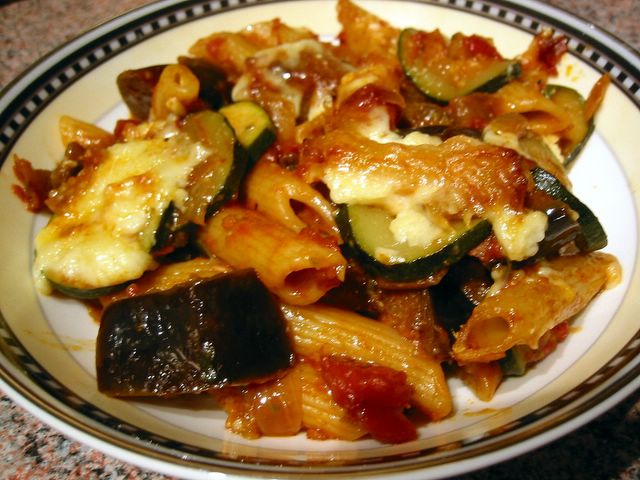
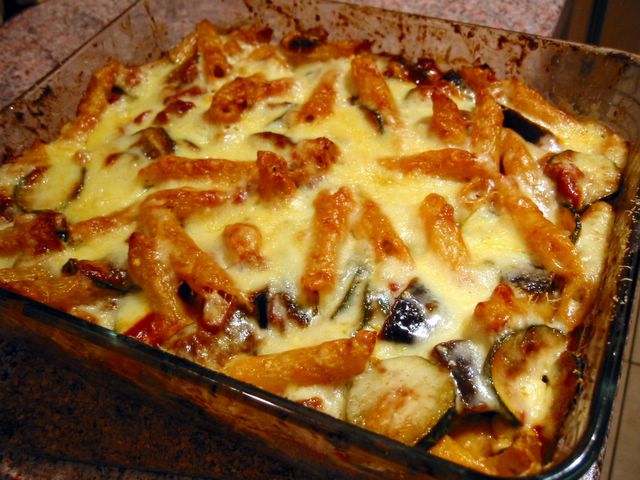
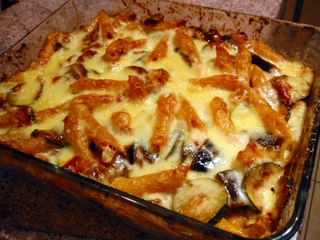
Now that the new year is here, I think a spot of non-meat all-veggie dish is all we need after 2 weeks of non-stop rich meaty food. *sigh* I wish I could wave a magic a wand to sweep away all the extra pounds I put on. So this simple pasta dish - I personally call it ratatouille with pasta - is very much welcome and a good deviation from meat dishes we've been having in the past holiday season. The veggies and the pasta can be prepared in advanced and then mixed and put together just before putting in the oven. This was adapted from the Good Housekeeping magazine of August 1995.
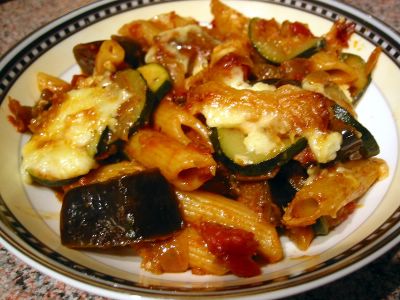 Pasta & Vegetable Gratin
350 g aubergine - roughly chopped
2 small courgettes - sliced thinly
1 onion - chopped
1 garlic clove - minced
2 Tbsp olive oil
2 tsp paprika
2 tsp tomato paste
400 g can chopped tomatoes
1/4 cup water
1 tsp sugar
salt and pepper to taste
250 g rigatoni or penne pasta
1 Tbsp pesto
150 g [1 1/2 cups] mature cheddar or Gruyere cheese
2-3 Tbsp freshly grated parmesan cheese
- Heat the olive oil in a saucepan. Fry the onion and garlic until soft.
- Add paprika and tomato paste, stir and cook for 1 minute.
- Add the aubergine and cook for 2 minutes.
- Add the tomatoes, sugar and water. Bring to boil then lower heat and simmer under cover for about 15 mins.
- Add the sliced courgette and cook for about 5 mins or until vegetables are done. Season with salt and pepper.
- Cook pasta according to packet instructions, drain and toss with the pesto sauce.
- Toss pasta in the vegetable sauce and transfer to a baking dish.
- Sprinkle cheeses on top.
- Bake at 200°C/fan 180°C/400°F for 20 minutes or until cheese on top in melted and golden brown.
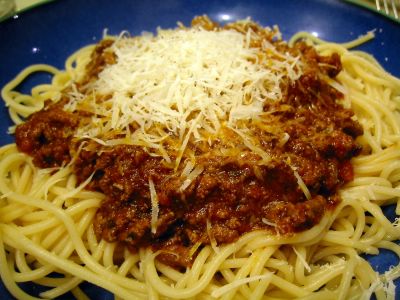 For several years now I've been trying to 'perfect' this popular Italian pasta sauce. Also called 'Spag Bol' or Spaghetti Bolognese (when served with that shape of pasta), I read in several books that Italians themselves wouldn't dream of serving this with spaghetti. They apparently use tagliatelle and after tasting this with a fresh version of that pasta, I could say I share their sentiment completely. This sauce can also be found in between lasagne sheets. Well, I've already got the Pinoy version of this plus even my son can come up with a bottled version (just brown some minced beef and pour in the bottled spaghetti sauce). But I fervently wanted to recreate the great taste of the meat sauce that we often get from Italian restaurants. This led me to looking it up in almost all the cookbooks and food magazines I come across. When I chanced upon the great collection of cookbooks in our local library, I was able to research on the authentic versions and derive a lot from it.
The word 'ragu' refers to slow cooked meat with little sauce. As with most traditional dishes there are a lot of variations even in Italy, not just from town to town but even probably from household to household. Some have all beef, have combinations of beef and pork, some use veal. Most use finely minced meat while others have diced ones. Versions also vary on whether or not to put vegetables, tomatoes, and milk or cream. The one thing that's universal in the more authentic recipes I found is the very slow and long cooking time, the use of wine (red or white), and spices. This version, which eventually met with the approval of my family, is one I culled from several cookbooks and the last one in particular from Anthony Worrall-Thompson who suggested Worcestershire sauce and anchovy sauce. It did the trick of adding a certain top note of yumminess to it. For one, my family loves its sauce very tomatoey therefore the chopped tomatoes and tomato puree are in. I also followed Delia Smith's and AWT's suggestion of browning the beef separately - it resulted in a more flavourful meat than if I did the browning right there in the stewing pot. I opted to use veggies in it because it imparts a slight sweetness, while the wine gives it body. Anyway, enough of my ramblings do try this and believe me just the aroma filling your kitchen would entice your housemates in.
Ragu alla Bolognese
1 kg minced beef (or half beef, half pork)
1 1/2 Tbsp olive oil
1 Tbsp minced garlic
2 medium onions - finely chopped
125 g pancetta or streaky bacon - finely diced
1/2 cup finely chopped carrots
1/2 cup finely chopped celery
1 Tbsp chopped fresh or 1 tsp dried thyme*
1 tsp dried oregano*
1 1/2 Tbsp chopped fresh or 1 tsp dried basil*
1/4 tsp nutmeg
1 1/2 Tbsp Worcestershire sauce
1 Tbsp anchovy sauce [optional]
1 bay leaf
1 cup white wine
2 x 400 g can of chopped tomatoes*
1/4 cup double concentrate tomato puree (tomato paste)
2 tsp sea salt (or to taste)
freshly milled black pepper
1/2 cup beef stock or water
butter or olive oil
125 g chicken liver - trimmed, washed and cut into 3/4-inch pieces
3 Tbsp single cream (light cream) [optional]
- In a pan (preferably non-stick), drizzle some olive oil and heat it up. Brown the minced beef in batches. Set aside.
- Wipe the pan and heat up some more olive oil or butter. Cook the chicken liver until well cooked and crumbly - about 5 minutes. Transfer to a bowl, then using a fork mash it up. If need be, finely chop some of the bits of liver that refuse to get mashed.
- In a big stewing pot, heat the 1 1/2 Tbsp olive oil and gently fry the bacon until it changes colour.
- Turn heat to low and add the garlic. Cook for 1 minute.
- Stir in the onion and cook gently for about 4-5 minutes or until translucent.
- Turn up the heat to medium and add the carrots and celery. Cook for about 3 minutes or until soft while stirring occassionally.
- Add the spices - basil, thyme, oregano. Stir and cook for about 1 minute or until aromatic.
- Tip in the browned minced beef and wine. Simmer until almost all the liquid has evaporated. Stir occassionally.
- Add the chopped tomatoes, concentrated tomato puree, bay leaf, nutmeg, Worcestershire sauce, anchovy sauce, chicken liver, salt, pepper, and stock.
- Bring to boil then bring down heat to lowest setting and simmer for *at least* 2-3 hours.
- If you have more fresh basil lying around, chop about 2 Tbsp of it and stir in the sauce.
- Add the cream and stir. Cook for another 1-2 minutes. Serve with freshly cooked al dente pasta such as spaghetti or tagliatelli.
*Notes:- In place of the basil, thyme, and oregano, you may use 1 Tbsp of Italian mixed herb.
- You may use 500 g passata in place of the chopped tomatoes and reduce the tomato paste to 1 Tbsp only.
I know, I know, this post has been way overdue. I should have immediately blogged about the wonderful Saturday back in October that I spent with a fellow food blogger Sha and her sister Tara. We walked across the Golden Jubilee footbridge from the Embankment side to cross the river Thames and then leisurely strolled along the Southbank culminating in a cafe in the National Theatre where we had pastries and hot cocoa. The sisters were such a good company to be with, in fact we were yakking so much we didn't realise it was already late afternoon and we have to go and fetch my daughter from Euston.
Later in the evening we had dinner at Gerrard's Corner restaurant in Chinatown. Well the food was okayish, nothing really outstanding so I guess I won't be back there for quite sometime.
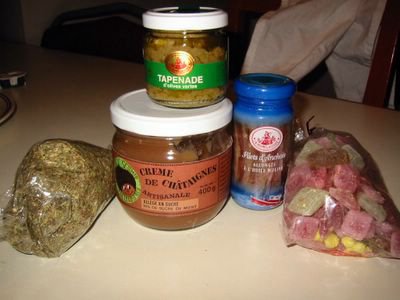
Sha was so generous to have lugged gifts for me from her French sojourn. Here they are in the picture below from left: Herbes de Provence, Chestnut cream/puree (bottom), olive tapenade (top), anchovies, and organic sweets. Thank you very much Sha and Tara for the wonderful company and these delicious treats!
My kids at first ignored the sweets when I gave it to them probably because the colours were not as vivid as the more commercial-chemical laden ones. But once they tasted it, it was gone in a minute! Hehehe. That's why I keep telling them, don't judge a food by its appearance, taste it first that's what I say.
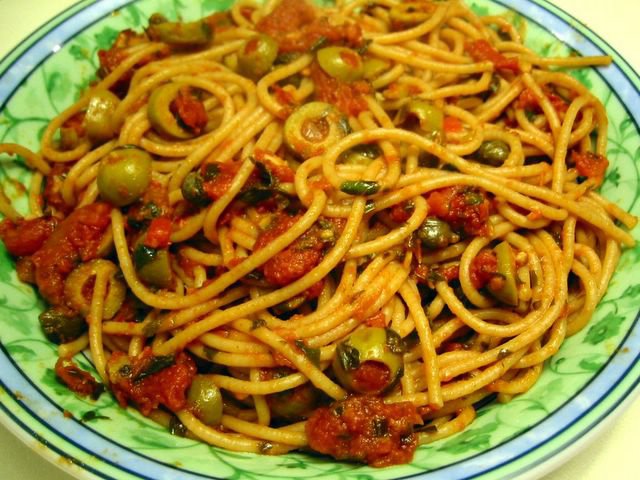
I thought of doing something with the chestnut cream or the anchovies. Since we were hankering for pasta last night, I thought of doing something quick and flavourful - Puttanesca sauce. I'm sure you've heard of the stories that the name of this sauce has some disreputable origin. Whatever it came from, this certainly is one very tasty sauce. My husband would definitely agree with that. Almost any type of pasta can be used here. For my picture below I used wholewheat spaghetti thus the slightly brownish tint.
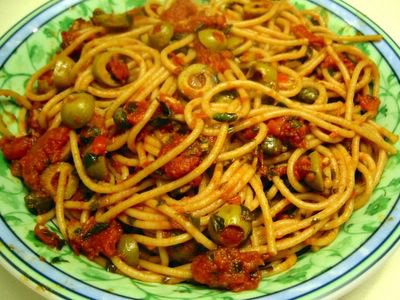 Pasta Puttanesca
4 pieces anchovy fillets - chopped
1 tsp minced garlic
1 fresh red chilli - deseeded and finely chopped (optional)
1 x 400 g can chopped tomatoes
1 Tbsp capers
1/2 cup sliced pitted olives
1/4 cup chopped fresh flat-leaf parsley
1 Tbsp chopped fresh basil
1 1/2 Tbsp olive oil
salt and pepper
250 g spaghetti
- Cook spaghetti according to the package instructions until al dente. Drain and set aside.
- Heat the oil in a pot or large pan.
- Saute garlic, anchovies, and chilli in the hot oil for about 1 minute.
- Add in the tomatoes and bring to boil. Lower heat and simmer for 2 minutes.
- Stir in olives, parsley, basil, capers, salt and pepper.
- Simmer for a further 4-5 minutes.
- Add the pasta in the pot and mix well with the sauce. If it's too dry drizzle with a little more olive oil.
- Serve immediately.
*Note: It would be better if you could time the cooking of the spaghetti so that it will finish just a few minutes before the sauce so that it is piping hot when you add it in the sauce.
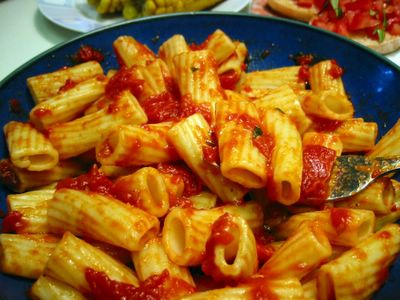 The name conjures up the meaning 'angry sauce' because of the hot chilli in it. Good way to use up tomatoes with just a little chilli - whether you use dried or fresh is alright. It's very easy, in fact, I'm discovering now a lot of these Italian pasta sauces are quite easy and fast to do. You'll just have to use fresh ingredients as much as possible to get the best flavour. Vegetarians or even vegans will like it as well with nary a sight of meat in it. A lot of Italian cookbooks advise not to serve with Parmesan cheese. I wonder why, because of the spiciness? Certainly when I had it I prefer it as it is, mopping up the sauce with some butter smeared warm crusty bread and a glass of red wine. Mmmm...
The Food of Italy cookbook provided the original material which I adapted.
Pasta Arrabbiata
1 1/2 Tbsp olive oil
1/2 Tbsp minced garlic
1 fresh birds eye chilli or 1/4 tsp dried chilli flakes (or to taste)
800 g canned chopped tomatoes or fresh tomatoes*
sea salt
2 Tbsp chopped fresh basil
500 g penne or rigatoni dried pasta
- Heat the olive oil in a saucepan or pot in low heat.
- Saute garlic and chillies until garlic is light golden brown. Keep the heat low to prevent the garlic from burning.
- Add the tomatoes and season with salt to taste.
- Simmer gently for about 30 minutes or until sauce is thick and rich.
- Meanwhile, cook the pasta according to package instructions until al dente. Drain and drizzle a little olive oil to prevent it from sticking to each other.
- Add the basil to the sauce and season again just before serving. Toss the pasta with the sauce and serve.
*Note: If using fresh tomatoes peel it first - lightly score the bottom of each tomatoes with two lines crossing each other. Blanch the tomatoes in hot water for about 30 seconds. Drain. By this time the tomatoes should be easier to peel, simply pull off skin from the bottom and all around.
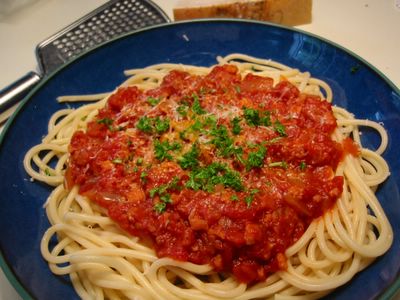
That night my son wanted a pasta dish. He suggested something cooking something else because we were quite tired of spag bol, baked pasta, or pesto. Flicking thru my cookbooks, I spied a familiar title that I have tried several times in restaurants before but have not attempted to replicate. Upon seeing it, I was quite impressed for I remembered this to be a quite tasty one but the ingredients were few and uncomplicated that can be found in any kitchen larder. I've seen most types of pasta used for this ranging from bucatini, rigatoni, penne, to even farfalle. This is quite versatile so, unless you're an Italian pasta purist, use whatever pasta you have. The Food of Italy cookbook provided the recipe that I adapted. It was a fast, tasty and easy dish to make though I had a hitch with the parsley. At the end it should have been stirred in. But I forgot! So as you can see it makes a nice garnish as well. ;)
Spaghetti Amatriciana
1 x 400 g can of chopped tomatoes
1 Tbsp double-concentrated tomato puree (tomato paste)
150 g chopped pancetta or smoked bacon
1 Tbsp olive oil
1 tsp minced garlic
1 small onion - chopped
1/8 tsp dried chilli flakes (or to taste)
2 Tbsp finely minced fresh parsley or 2 tsp dried parsley
salt and pepper
grated parmesan cheese
300 g dried spaghetti
- Heat olive oil in a heavy bottomed saucepan. Fry pancetta in medium heat until brown.
- Add onion and cook until soft.
- Tip in the garlic and chilli flakes. Stir and cook for about 1 - 2 minutes.
- Add in chopped tomatoes, tomato puree, and season well with salt and pepper.
- Bring to boil and simmer for about 15 minutes.
- Stir in parsley in the sauce and cook for another minute. Taste and adjust salt and pepper if necessary.
- While the sauce is simmering, cook spaghetti in boiling water until 'al dente' (about 11-12 minutes). Drain and set aside.
- Add cooked spaghetti to the pan and mix until well covered evenly by the sauce. Serve onto serving bowls and sprinkle parmesan cheese on top.
Note: You may also serve it with the sauce on top of the pasta as seen in the photo above.
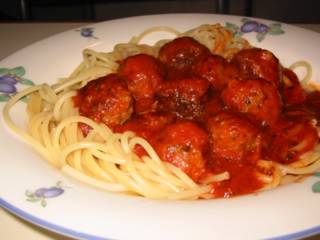
spaghetti meatballs
This is one of my son's favourite (he likes anything with pasta) which we had about a week ago. I finally persuaded him to do it by himself. I armed him only with the recipe and all the ingredients. And he did it ! Well done! Although as expected after he was finished our kitchen looked like a bombsite. Sauce splattered everywhere, bits of onion and garlic on the floor, pots and pans galore plus a mountain of things to wash in the sink. Haay naku, at least he's not as useless in the kitchen as his dad ;-).
Okay on with the recipe, the key here is to keep the size of the meatballs small. Make it no bigger than a conker (about 3/4 to 1 inch in diameter). The bigger the meatball the tougher it tends to be. And it's easier to keep the ball's shape when it's small. I baked the meatballs to minimise oil but you can always pan fry it.
Spaghetti Meatballs
*For the meatballs:
500 g minced beef
2 slices of white bread - crusts removed
5 Tbsp milk
3 Tbsp grated parmesan cheese
2 Tbsp finely chopped parsley or 1 Tbsp dried parsley
1 tsp sea salt
1 egg - slightly beaten
freshly ground pepper
*For the sauce:
1 Tbsp minced garlic
1 medium onion - finely chopped
1/8 tsp dried chili flakes
1 Tbsp dried mixed herbs
1 tsp sea salt
2 x 400 g cans chopped tomatoes
*Make the meatballs:
- Tear apart sliced bread. Soak in milk for about 30 minutes or until bread is completely soft. (You can also use an equivalent amount of breadcrumbs). Mash it with your fingers.
- Combine beaten eggs, salt, and pepper.
- Add in minced beef, parsley, softened bread, and parmesan cheese. Mix well.
- Form into balls of about 3/4 to 1 inch in diameter. (One technique in making the balls - put some meat mixture on your palm; make a fist and then let the meat come out between your forefinger and thumb).
- Put meatballs on a baking tray and bake in 350F for about 5 minutes or you can pan fry them until browned. Transfer to a bowl/plate and set aside.
*Make the sauce:
- Saute the garlic and onion in a pot until onion is translucent.
- Add the chili flakes and saute for about 1 minute.
- Add the mixed herbs and saute for another minute.
- Pour in the chopped tomatoes, salt, and meatballs. Mix well.
- Bring to boil and simmer for 1 hour. Add water a little bit at a time if it is drying out too much or if you want more sauce.
*For the pasta:
- Put water in a big pot (enough for the pasta to swirl around - about 2/3 up the side of the pot). Add 1 tsp. salt. The salt is to keep the water from boiling over too much.
- Bring to boil then add the spaghetti. Start timing now. Follow the timings suggested on the pasta package. This is usually 11 minutes for regular spaghetti or tagliatelli and 9 minutes for the quick cooking ones. Stir pasta from time to time.
- Pour and drain cooked spaghetti into a colander (not plastic!). Briefly put under tap water; this is to remove excess starch - drain again. *Update* I don't put oil any more after draining since you want the sauce to cling to the pasta not slide off.
*Serve meatballs with sauce on top of spaghetti. Grate more parmesan cheese on top if desired.
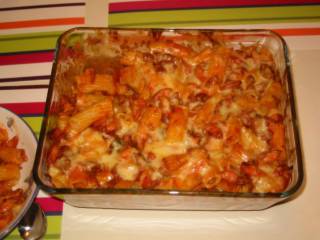 This is originally called Baked Macaroni but since most types of pastas can be used (fusilli, penne, rigatoni, radiatore, rottini, etc.) so I decided to call it 'baked pasta'. I used rigatoni in the picture above. The sauce is quite "Filipinized", i.e., it's sweetish and has hotdogs! You can add or substitute ham for the hotdogs. It's delicious and is a favourite of my kids. It can be used as a spaghetti sauce as well although it's best to reduce the water or thicken it with breadcrumbs towards the end.
Baked Pasta
This is originally called Baked Macaroni but since most types of pastas can be used (fusilli, penne, rigatoni, radiatore, rottini, etc.) so I decided to call it 'baked pasta'. I used rigatoni in the picture above. The sauce is quite "Filipinized", i.e., it's sweetish and has hotdogs! You can add or substitute ham for the hotdogs. It's delicious and is a favourite of my kids. It can be used as a spaghetti sauce as well although it's best to reduce the water or thicken it with breadcrumbs towards the end.
Baked Pasta
500 gm pasta shapes (penne, rigatoni, macaroni, fussilli, etc.)
1 tsp minced garlic
1 medium onion - chopped
1 Tbsp fish sauce (patis)
1 Tbsp oil
500 gm minced beef (or pork)
350 gm hotdog - sliced lengthwise then diagonally
1 Tbsp soy sauce
500 gm passata (tomato sauce)
1/2 cup tomato ketchup
1/2 cup water
1 cup grated cheese (reserve 3/4 cup for topping)
1 red bell pepper - deseeded and cubed
1/4 cup milk
- Cook pasta as directed in the package. Drain and set aside.
- Saute garlic and onions in oil. Add minced beef and brown for a few minutes.
- Add patis, cover and simmer for 5 minutes.
- Add hotdogs, soy sauce, tomato sauce, ketchup, bell pepper, and water. Bring to boil and simmer for about 1 hour.
- Add milk and 1/4 cup of the cheese. Simmer for 5 minutes or more until beef is tender.
- Mix cooked pasta and sauce together. Arrange in a baking dish and top with remaining grated cheese.
- Bake at 180C/fan 160C/350°F for 20 minutes. Serve.
NOTE: This sauce can be used for spaghetti as well. If the sauce is too thin for spaghetti add a few tablespoons of ground dry breadcrumbs and simmer for a few minutes.