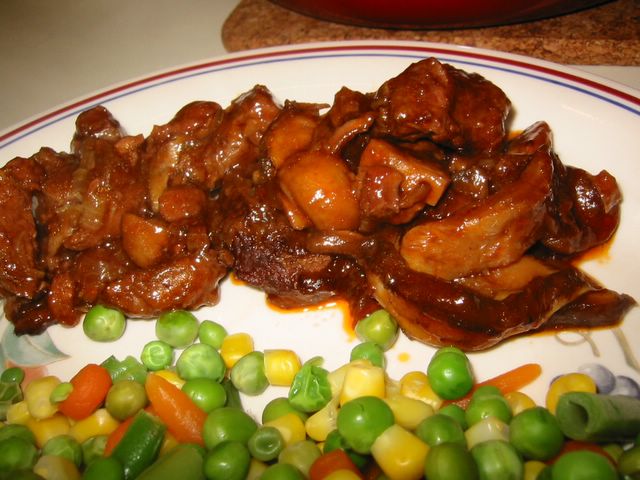
A surprisingly delicious beef stew was unearthed from the Bon Appetit website. I bought a kilo of meaty beef ribs (short ribs) in the Birmingham market a few weeks ago and was looking for a recipe to make a tasty dish out of it. And I was not the least disappointed. The things that made it standout are the bones, which gave extra flavour, the garlic (surprising I know) and the excellent red wine I got in our pantry.
This is great with rice, mash potatoes, or just boiled new potatoes with steamed veggies on the side. I only cooked half of the recipe so I adjusted it accordingly.
Red Wine Braised Short Ribs of Beef
1 kg bone-in beef short ribs, cut crosswise into 2-inch pieces
sea salt and freshly ground black pepper
2 Tbsp vegetable oil
1 large onion - chopped
1 large carrot - peeled, chopped
1 celery stalk - chopped
1 1/2 Tbsp plain flour
2 tsp double-concentrated tomato puree (tomato paste)
375 ml [half a bottle] dry red wine (preferably Cabernet Sauvignon)
5 sprigs flat-leaf parsley
4 sprigs thyme
2 sprigs oregano
1 sprig rosemary
1 fresh or dried bay leaves
1/2 head of garlic - halved crosswise
2 cups beef stock
- [Optional] Preheat oven to 180°C/fan 160°C/350°F.
- Season short ribs with salt and pepper.
- Heat oil in a large oven-proof pot over medium-high. Brown short ribs on all sides in batches, about 8 minutes per batch. Transfer short ribs to a plate. Pour off all but 2 Tbsp. drippings from the pot.
- Saute onions, carrots, and celery in the same pot and cook over medium heat. Stir often, until onions are browned and tranlucent, about 5 minutes.
- Add flour and tomato paste. Stirr constantly, until well combined and deep red, about 2-3 minutes.
- Stir in wine, then add short ribs with all of its juices. Bring to a boil; lower heat to medium and simmer uncovered until wine is reduced by half, about 20 minutes.
- Add all herbs including the garlic. Stir in stock. Bring to a boil, cover, and transfer to oven. Cook until tender for about 2-2.5 hours.
OR
Cook on the hob in very low heat until short ribs are tender, about 1.5 hours.
- Transfer short ribs to a platter. Strain sauce from pot into a measuring cup. Spoon fat from surface of sauce and discard.
- Season sauce to taste with salt and pepper. Serve in shallow bowls over mashed potatoes or boiled new potatoes with sauce spooned over.

We love pasta and we love meatballs, too. We already got a tried and tested spaghetti meatballs recipe but it doesn't stop us to be always on the lookout for any decent meatballs recipe out there in the world. So it's normal that we try out this much vaunted recipe from the Epicurious website that's got a very high review rating from readers. They were right! Only a few adjustments in the recipe and it's all thumbs up from the whole family. The recipe is humongous. Probably enough to feed a horde of people for a party. So I promptly halved and reduced volume and spice proportions and it scaled down well.
Spaghetti and Meatballs
*For the meatballs:
750 g minced beef
250 g minced pork
1 1/2 cups torn day-old Italian bread (or any white bread)
1 cup whole milk
1 medium onion - chopped
2 Tbsp extra-virgin olive oil
5 garlic cloves - finely chopped
3 large eggs
60 g [about 1 cup] parmesan cheese - grated
3 Tbsp finely chopped fresh flat-leaf parsley
2 Tbsp finely chopped fresh oregano (or 1/2 tsp dried)
1/2 Tbsp grated lemon zest
2 1/2 tsp fine sea salt
1/2 tsp ground black pepper
1/2 cup vegetable oil (for frying)
*For the tomato sauce:
6 x 400 g cans of chopped or plum tomatoes
1 medium onion - chopped
3 garlic cloves - finely chopped
3 Tbsp extra-virgin olive oil
2 tsp fine sea salt
1/2 tsp ground black pepper
1 kg dried spaghetti
*To make tomato sauce:
- In a large pot, heat the olive oil and cook the onions in medium heat until soft - about 5 minutes.
- Add the garlic and cook until softened - about a further 2 minutes.
- Add the rest of the ingredients, bring to a boil then lower heat and simmer uncovered stirring occasionally until thickened - about 45 minutes to 1 hour.
- Midway through cooking, you can crush the whole tomatoes with a spatula or stick blender.
*To make meatballs:
- Fry the onions in a wide frying pan on medium heat. Cook until softened while stirring occasionally - about 5 minutes.
- Add garlic and cook while stirring occasionally until fragrant and softened - about 2-3 minutes. Transfer to a bowl and cool completely.
- Soak bread in milk for about 20 minutes or until soft. Squeeze the bread firmly to remove excess milk. Discard excess milk.
- In a large bowl, combine all the ingredients except for the vegetable oil. Mix with your hands just until combined - do not overmx.
- Form into balls about 28 g (1 oz) in weight or about 1 1/2-inch in diameter.
- Heat vegetable oil in the same pan used with the onion and fry the meatballs in batches without crowding until browned all over - about 5 minutes each batch.
- Add fried meatballs into the tomato sauce and simmer for about 30 minutes.
- Cook spaghetti according to instructions in the packet.
- Serve spaghetti with meatballs and sauce with the optional grated parmesan cheese on top.
Meatballs are much appreciated in our family. Although mainly in the spaghetti meatballs type, we also like Swedish meatballs which we often buy in the local Ikea whenever we have a chance to lumber around there. But this is the first time I have created these from scratch. Really it's very similar to the other meatballs I've done before but the main difference is in the cooked chopped onions and allspice in it. Actually, the allspice is very very important otherwise you won't have that smell and taste typical to Swedish meatballs. Alton Brown provided me with a great recipe that I adapted. And although the kids didn't like the white gravy I still think all of it is great tasting. I adjusted the recipe to cater for 1 kg of meat since almost all the minced pork or beef packets sold here are in 500 g sizes.
Swedish Meatballs
2-1/2 slices of white bread (or 2/3 cup breadcrumbs)
1/3 cup milk
4 Tbsp melted butter
2/3 cup finely chopped onions
1-1/2 tsp fine sea salt + a pinch
500 g minced pork
500 g minced beef
2 large eggs
1/2 tsp black pepper
1/3 tsp ground allspice
1/4 tsp grated nutmeg
*Gravy
1/4 cup plain flour
3 cups beef stock
1/4 cup double cream
- Tear the white bread into pieces into a bowl. Add in the milk and leave to soak for about 30 minutes or until soft.
- In a 12-inch high-sided skillet, heat the 1-1/2 Tbsp of the butter and saute the minced onions. Sprinkle a pinch of the salt and cook until soft. Remove into a bowl or dish and let cool.
- Mash the soaked bread then add the rest of the ingredients. Combine until well mixed.
- Form into 1-1/4 inch balls (28 g/1 oz).
- Fry in the same skillet used for the onion using the rest of the melted butter in medium to low heat. Cook until golden brown on all sides (about 7-10 minutes). Do not crowd them too much; if need be fry in batches in which case you may have to add more butter.
- After frying, put the meatballs in a preheated 95°C/fan 75°C/200F oven to keep warm while making the gravy.
*For the gravy:
- You should have about 1 Tbsp of melted butter left in the skillet used for frying the meatballs. Decrease the heat to low and sprinkle the flour in it. Whisk until light brown - about 2 minutes.
- Add the beef stock gradually and simmer until thick.
- Stir in the double cream and cook until thick. Taste and adjust seasoning.
- Serve either covering the meatballs or on the side.
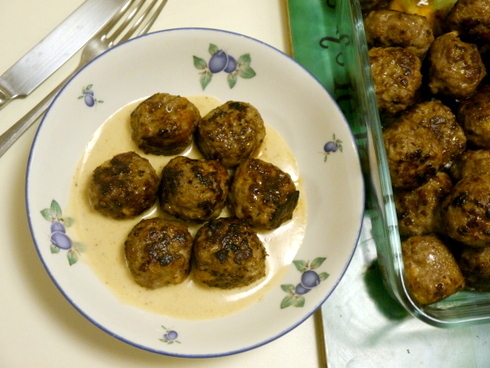
Here's one recipe that I've been doing on and off in different versions for years. And it's only now that I'm documenting it. Actually, the Daring Cooks urged me to do this for the November/December challenge. It was originally the theme all the way back on May 2012. I haven't rejoined yet at the time so I have my excuses.
Beef Bourguignon or Beef Burgundy is like most stews but the main distinction is that it has a lot of red wine while the British variety has beers in different forms (ales, bitters, porters, etc). They're all very good especially during winter when you need something hot and hearty for supper.
For this recipe I made the mistake of reducing the mushrooms. As expected they shrank in size so there wasn't as much as I would like to have. The mushrooms are great to soak up all that robust taste of the sauce so don't skimp on it. Finally, serving this with boiled or steamed potatoes, bread or even rice is great for a hearty meal.
Beef Bourguignon
(Beef Burgundy)
2-3 Tbsp olive oil
200 g streaky bacon - chopped
1.5 kg stewing beef - cut into 1 1/2-inch cubes
1 onion - chopped
1 big carrot - chopped into big chunks
1 tsp sea salt
1/2 tsp freshly ground black pepper
1/4 cup flour
1 1/2 cups beef stock
720 ml (1 big bottle) red wine (Burgundy, Bordeaux, Pinot Noir, etc.)
2 cloves garlic - minced
2 Tbsp double concentrate tomato puree (tomato paste)
1/2 tsp thyme leaves
1 bay leaf
3 Tbsp butter
300 g small onions - peeled and kept whole
500 g small button mushrooms
- In a heavy bottomed casserole pot, heat olive oil and fry bacon until brown and crispy. Remove with a slotted spoon and set aside.
- In the same casserole, brown the beef pieces in batches until brown all around. Add more olive oil if needed. Remove and set aside.
- Add in the chopped onion and cook in medium-low heat for 2 minutes.
- Add the carrots and saute for another 2 minutes.
- Return the bacon and beef in the casserole. Sprinkle with the salt, pepper, and flour and toss for a minute.
- Stir in the wine, tomato puree, garlic, thyme, bay leaf, and just enough stock to cover the beef. Bring to boil while scraping the browned bits at the bottom.
- Lower heat and simmer for 1.5 hours or until beef is tender.
OR
Put in an oven pre-heated at 150°C/fan 130°C/300°F and bake for 3-3.5 hours or until beef is tender.
OR
Cook in a slow cooker for 3-4 hours on low or 2 hours on high. (Consult your slow cooker manual for best result.)
- While it is stewing, melt 1 Tbsp of the butter in a frying pan and saute the peeled small onions until golden brown. Set aside.
- Melt 2 Tbsp of the butter in the same frying pan and saute the mushrooms until brown. Set aside.
- Add the sauteed onions and mushrooms about 3/4 of the way of the cooking time. Continue cooking until done.
Note: Like any stew, this is best served the day after cooking.
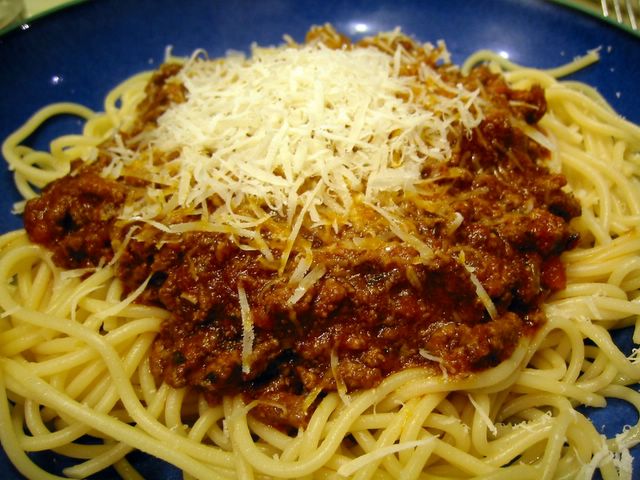
My kids are such pasta fans that we cook Italian-style spaghetti bolognese almost every week. After several years, our version of the recipe has evolved from the usual elaborate one I used to do to this most basic recipe that we use week in, week out. With this one, I just throw in whatever is available. Sometimes it's all chopped tomatoes and no passata, sometimes it's red wine or none at all, most of the time there are no chicken livers or I forget to add Worcestershire sauce. Other times there are even no carrots nor celery. It's quite versatile such that most ingredients are optional. And you can tweak it as much as you like as long as there is that mandatory ingredients of minced meat and tomatoes (of whatever form).
Spaghetti Bolognese
1 kg minced beef (or 3/4 beef, 1/4 pork in proportion)
1 1/2 Tbsp olive oil
2 tsp minced garlic
1 large onion - finely chopped
125 g pancetta or streaky bacon - finely diced
1/2 cup finely chopped carrots
1/2 cup finely chopped celery
1/8 tsp (pinch) dried thyme*
1 tsp dried oregano*
1 1/2 Tbsp chopped fresh or 1 tsp dried basil*
1/4 tsp nutmeg
1 Tbsp Worcestershire sauce
1 bay leaf
1 cup white wine
1 cup full-fat milk
1 x 400 g can of chopped tomatoes
500 g passata (tomato sauce)
1 Tbsp double concentrate tomato puree (tomato paste) [optional]
2 tsp sea salt (or to taste)
freshly milled black pepper
1/2 cup beef stock or water
butter or olive oil
125 g chicken liver - trimmed, washed and cut into 3/4-inch pieces [optional]
- In a pan (preferably non-stick), drizzle some olive oil and heat it up. Brown the minced meats in batches. Set aside.
- If using chicken liver - wipe the pan and heat up some more olive oil or butter. Cook the chicken liver until well cooked and crumbly - about 5 minutes. Transfer to a bowl, then using a fork mash it up. If need be, finely chop some of the bits of liver that refuse to get mashed.
- In a big stewing pot, heat the 1 1/2 Tbsp olive oil and gently fry the bacon until it changes colour.
- Add in the garlic and cook until aromatic.
- Stir in the onion and cook gently for about 4-5 minutes or until translucent.
- Turn up the heat to medium and add the carrots and celery. Cook for about 2 minutes, stirring occasionally.
- Add the spices - basil, thyme, oregano. Stir and cook for about 30 seconds.
- Tip in the browned minced beef and white wine. Simmer until all the wine has evaporated.
- Add the milk and bring to boil. Lower heat and simmer until almost all the liquid has dried up.
- Add the chopped tomatoes, passata, tomato puree (if using), bay leaf, nutmeg, Worcestershire sauce, chicken liver, salt, pepper, and stock.
- Bring to boil then bring down heat to lowest setting and simmer for *at least* 2-3 hours. The longer you simmer it the better.
- If you have more fresh basil lying around, chop about 2 Tbsp of it and stir in the sauce.
- Serve with freshly cooked al dente pasta such as spaghetti or tagliatelli.
*Note: In place of the basil, thyme, and oregano, you may use 1 Tbsp of Italian mixed herb.
The June Daring Cooks’ challenge sure kept us rolling – meatballs, that is! Shelley from C Mom Cook and Ruth from The Crafts of Mommyhood challenged us to try meatballs from around the world and to create our own meatball meal celebrating a culture or cuisine of our own choice.
Meatballs especially ones dunked on top of pasta is a favourite in our family. So as expected I have already done quite a number of meatball recipes in this blog. There's our usual spaghetti meatballs, the soupy almondigas, the Spanish albondigas for tapas, even a sweet and sour meatballs. I've been wondering what to cook until I spied this Classic Beef Meatballs recipe from ABC News. Although our usual family meatballs is almost the same as other Italian-style meatballs around, this one had a significant variant in the form of ricotta cheese. That had got me all intrigued enough to try it. And I wasn't disappointed, the cheese made it very moist and soft. The golf ball-sized meatballs weren't to my liking, however. I like them smaller, easier to handle and bite - probably the size of a conker is best for me. So here is my adaptation of that classic beef meatballs.

Classic Beef Meatballs
1 kg minced beef (80% lean beef)
1 cup (250 g) ricotta cheese
1/2 cup dry breadcrumbs
2 eggs - slightly beaten
2 tsp sea salt
1/4 tsp crushed pepper flakes (optional)
1 tsp dried oregano
1/2 cup chopped fresh parsley or 1 Tbsp dried
1 tsp minced garlic
olive oil
*For the tomato sauce:
3 Tbsp olive oil
2 tsp minced garlic
1 medium onion - chopped
1/2 tsp dried oregano
4 x 400 g can of chopped tomatoes
2 tsp sea salt
freshly ground pepper (to taste)
1 bay leaf
2 Tbsp double concentrate tomato puree (tomato paste)
*Do the tomato sauce first:
- Saute the onion and garlic in olive in a heavy-bottomed saucepan on medium heat until the onion is translucent.
- Add the oregano, ground pepper and sea salt. Cook for about 1-2 minutes.
- Add the tomatoes, tomato puree, and bay leaf.
- Bring to boil then lower heat to simmer for 1 hour (if making as sandwich filler) or just 10 minutes (if making for pasta) making sure to stir from time to time to avoid burning. Taste and add more salt if necessary or a little sugar if too sour.
*For the meatballs:
- Grease a 13 x 9-inch metal baking pan generously with the olive oil. Preheat oven to 230°C/fan 210°C/450°F.
- Mix all the other ingredients for the meatballs in a bowl. Combine well.
- Shape into balls about the size of a conker (around 1 inch in diameter) making sure to pack the meat firmly. Arrange closely in the greased pan (they should be touching each other).
- Bake in the oven for 15 minutes. A meat thermometer inserted in the middle should read 74°C/165°F.
- Now, if you want this for sandwiches, spoon the tomato sauce on top of the meatballs and return to the oven for another 15 minutes.
- If, however, you want this for pasta, pour all the roasted meatballs in the tomato sauce pot and continue simmering for 1 hour.


Thanks to my husband's colleague Dave who gave us his prized hybrid chillies he got from a specialist grower. They added a complexity of flavour and a variety of spiciness that is departure from the usual. The heat I felt was around the mouth and back of throat which was surprisingly pleasant for me not like the usual in-your-face hot spiciness that just gives you pain. For someone who's a chilli wimp this was a great adventure.
This chili is a departure from the usual recipes where they normally use minced (ground) beef. True Texan chili I've read and heard - never use minced meat only cut-up pieces of well-marbled beef. Thus the use of braising or chuck beef was important. I think other stewing beef parts like the shin would be good as well. And that is only one of the differences. It also never use beans nor tomato sauce. And I guess bell peppers would be sacrilege as well!
Texas Chili
1 kg braising beef (or chuck or stewing beef) - cut into 3/4-inch pieces
6-8 pieces of dried New Mexico, guajillo, or pasilla chillies (or combination)*
1 1/2 tsp ground cumin
1 tsp whole black peppercorn
2 tsp sea salt
5 Tbsp (approx.) lard, butter, or vegetable oil
1 medium onion - finely chopped
3 cloves garlic - minced (about 1 Tbsp)
2 Tbsp masa harina (corn tortilla flour)*
2 cups beef stock
1 Tbsp firmly packaged dark brown sugar
1 Tbsp white distilled vinegar*
sour cream
lime wedges
- [Optional] If you're using dried chillies, lightly toast the dried chillies in a pan over medium-low heat about 2-3 minutes on each side. Be careful not to burn them or they will taste bitter. Put in a bowl and soak in very hot water until soft (about 30-45 minutes).
- Split the chillies; remove and discard the seeds and stems. Chop roughly.
- Place in a blender or food processor and add salt, ground cumin, and 1/4 cup water. Blend/process until a smooth paste forms. Set aside.
- In a heavy pot, heat 2 Tbsp of the lard or oil. Brown the beef on at least two sides in small batches over medium heat. Add more oil if needed. Set aside.
- Reheat pot and add more lard/oil if needed. Saute the onion and garlic. Cook for about 4 minutes over low-medium heat.
- Add in the chilli mixture and quickly saute for a few seconds. Watch out, this might sting your eyes and throat so just cook them very briefly.
- Add the beef, mix briefly. Then add the beef stock.
- Slowly add the masa harina while stirring. Cover and bring to boil. Lower heat and simmer for about 1.5 hours or until beef is tender. (Note: I used a pressure cooker and it did not seem to affect the quality)
- Stir in the brown sugar and vinegar and cook a few minutes more until dissolved. Taste and add more salt or pepper if desired.
- Serve with sour cream and wedges of lime with long grain rice or chips (thick french fries).
*Notes: - You can use plain tortilla chips if you can't find masa harina. Grind them into fine crumbs before using.
- Dried chillies are not mandatory. You may use fresh chillies; just skip procedure no. 1 above.
- I used cane vinegar for this recipe and it was okay.

My eldest and youngest love their pasta - that's a given. It's but natural that we're looking at the many variations of the sauces that we can pair with it. Their absolute favourite is the Ragu Bolognese, aka spaghetti tomato meat sauce in this side of the Western world. The three differing sauces that we regularly use with spaghetti are: Classic Ragu Bolognese, Pinoy-style sauce, and the Meatballs sauce. This one I'm posting is quite a departure from those three. Well, it's similar to the first one but quite distinct because it does not involve any herbs, garlic nor wine! Plus the stewing technique is different and the sauce is not simmered down a thick consistency. It is kept topped up and moist. I was quite intrigued so I promptly made it a few days later. Lo and behold, the resulting sauce is really really good which even the harshest critics in the family concurring that this is a gem of a sauce.
Cooking competitions for viewers occurs from time to time in the TV magazine program The One Show in the BBC. And it's there that I chanced upon this winning recipe from a guy who in turn got it from his Italian granny-in-law. Actually she didn't give it to him, he just watched her all the time she cooks it! This happened early in 2012 and I couldn't find the permalinks anymore. Good thing I emailed the recipe to myself as soon as it was published. So who ever you are (the winner and his Italian nonna-in-law) thank you very much for sharing. Your sauce is now my kids' new pasta sauce favourite.
Tweaks I made for this recipe are - increased recipe to x1.5, changed proportion of beef to pork, and increased the passata. It's mainly to use up all the ingredients as per supermarket packaging. I really don't know what to do with a left-over 150gm of passata nor with 200gm of minced beef. Well ... I could make some other dish out of it but I couldn't be bothered to be honest, I just chucked them all in the pot which I'm sure all of you harried cooks would relate to.
So if you're the type who doesn't like herbs or the after-taste of wine in their pasta sauce this one's for you.

2 Tbsp extra virgin olive oil
500 g minced beef
400 g minced pork
3 good-quality pork sausages (97% pork) [about 200 gm]
2 Tbsp extra virgin olive oil
60 g onion - finely chopped
60 g celery - finely chopped
60 g carrots - finely chopped
500 g passata (tomato sauce/puree)
2 Tbsp double-concentrated tomato puree (tomato paste)
2 cups stock
salt and pepper to taste
- Remove sausage from casing. Mix the beef, pork, and sausage in a bowl (best to do by hand) until well combined. Set aside.
- Heat a heavy saucepan or pot. Add the olive oil in low heat and saute the onion, celery, and carrots. Cook for around 5-10 minutes or until softened.
- Add the mixed meat and brown evenly in medium-low heat. Do not overcook until dry. It must stay moist. Break up the meat with your cooking spoon as you brown it.
- Once browned, pour in the passata and tomato puree. Add the stock and stir. It should be covered by liquid.
- Season with salt and pepper. (I usually add 1 tsp sea salt at this point).
- Simmer on very low heat with the cover slightly ajar for about 4-5 hours. Taste regularly and add more salt and/or pepper if needed.
- Check the sauce regularly and if the sauce is thickening too quickly, add a little more hot water or stock. The sauce should always cover the minced meat and not allowed to dry out.
- Serve with spaghetti or any pasta shapes with a topping of freshly grated Parmesan cheese (although this is traditionally eaten with tagliatelle or rigatoni).
This is one of my all-time favourite winter comfort food. It's rich, spicy, flavourful, and very Southeast Asian. Like our adobo, there are a lot of variations on it as there are households. But from what I can gather, the essential ingredients besides the meat are the spices (onion, curry leaves, curry powder, turmeric, and chili pepper) and the coconut milk. All the other ingredients are fair game to the diversity of adaptations. And when I say lots of variations that means you will see more versions of this particular dish that I will experiment on and will invariably be seen in this food blog sometime later. In the next decade perhaps? ;)
I love the resulting sauce in it (eaten with lots of hot steamed rice) after a long stew. According to my Malaysian friend, people in the northern parts of Malaysia and Indonesia cook it until the sauce dries out and the meat is fried in the rendered oil from the sauce. This they say is primarily done to preserve the meat and not spoil easily. Believe me, I tried this once and it was superb! It's wonderfully good with some white fluffy bread with some lettuce and cucumber stuck in.
This recipe is adapted from an old Asian cookbook in the Bromley Library which I forgot to write down the name. In fact, the title of the recipe in the book was 'Dry-Fried Beef Curry'. The instruction was to cook until dry but I love the sauce very much that I put in the option of not doing this if preferred.
Tamarind liquid is used here. You can make this two ways: first by diluting tamarind paste with water; secondly by soaking about 1 Tablespoon (add more or less depending on the sourness you want) of tamarind pulp in 1/2 cup of hot water for about 15 minutes then strain the liquid through a sieve and discarding the pulp. The tamarind pulp I get here in the UK are all in rectangular block shape. While in the Philippines (well at least in our barrio), it is formed into balls and are called tipe (ti-pe). My lola (grandma) used to always ask me to buy some from the corner sari-sari store whenever we have pinangat na isda (stewed fresh fish) for our meal. We make tamarind liquid with it which is then mixed with either our home-made patis (fish sauce) or heko - the scum skimmed from the boiling talyase (big wok) of liquid during patis-making. Yumm-mmy !

1 kg stewing beef - cut into serving sizes
2 medium onion - chopped
6 fat cloves of garlic
1 Tbsp chopped ginger
2-3 fresh red chillies - stalk and seeds removed
2 tsp sea salt
2 cups [400 g] coconut cream or thick coconut milk
1 tsp ground turmeric
2 tsp chili powder (optional)
2 tsp ground coriander
6 curry leaves
1 stem fresh lemon grass
1 tsp galangal or ginger powder
1/2 cup tamarind liquid
2 tsp sugar
- Place garlic, onion, ginger, fresh chillies, and 1/2 cup of the coconut cream in a blender or food processor. Blend until smooth.
- Put in a wide mouthed casserole. Wash out the blender with the remaining coconut cream and add to the casserole.
- Add the rest of the ingredients except tamarind liquid and sugar.
- Bring to boil then add the tamarind liquid. Lower heat to low and simmer until meat is tender (about 1.5 hours) while stirring from time to time.
- By this time, the sauce would be reduced and thick. Add the sugar, stir and cook for about 2 minutes more.
- Dish up and serve with hot steamed rice.
*Note: If you decide to do the dry-fry version:- Cook this uncovered. When the sauce gets too dry add a little water just prevent it burning before the meat is tender.
- Continue simmering until almost dry. Stir often.
- When oil separates from the gravy, stir in the sugar. Allow the meat to fry in the oily gravy until dark brown while stirring constantly.
It's time to update this old post that I had to put offline since it was getting a lot of hits based on a very negative and insulting post of another food blogger. He was mocking my picture saying that it looks like a dog's dinner although he didn't have the courage to post his name online (or even just his persona) in the comments section. His blog was based around all the disgusting food pictures he can find and went on great lengths to mock them. I say them lot never last.
While admittedly my picture is not a paragon of beauty (I will upload a better picture later). I think the insults and online mocking is uncalled for. If you can't say anything nice don't say anything at all. Besides, there are food that taste better than they look - like ma po tofu for example.
Well, nowadays his blog is nowhere to be found. And so is the old Frugal Fridays food blog to which I initially intended this recipe. But nevermind blogs of short endurance, I resolved to post this again for my recipe collection.
This is one of cheaper dishes you can make. As you can imagine this graces our dinner table here and when we were growing up in the Philippines whenever we want something cheap and cheerful and relatively easy to make.
Actually this is quite adaptable in terms of stretching to feed people. The principle is the more people you have to feed the more potatoes or water (or both) you have in add in. And I've seen near soup-like consistency of this that feeds a large family with a big help from heaps of rice of course. It's quite versatile in that you can have it with rice as mentioned and with almost all types of breads.
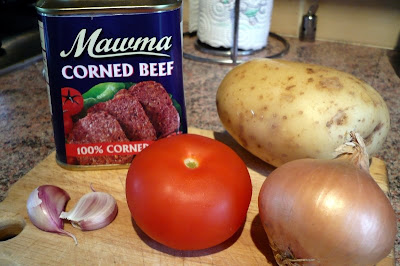
As you can see from the ingredients I used this would hardly come up to £3.00. One thing about the canned corned beef, the brands they sell in the local supermarkets like Tesco, Sainsburys, Morrisons, etc., are quite bland. They don't even taste beefy. Previously I have to look for Libby's brand in either Filipino, Chinese, or Caribbean shops. It's worth mentioning as well that the Purefoods brand from the Philippines is simply delish. Anyways, it's a good thing we found that the cut-price supermarkets of Aldi and Lidl sell brands like Mawma and Premium which taste closer to Libby's and the ones we got used to in the Phils. Besides the fact that they are much much cheaper than supermarkets.
Cooking this is a doddle. Probably the only effort you need is in slicing the garlic, onion and tomatoes. The latter is optional because I learned from experience that if you put tomatoes it spoils faster than without. If you're eating it all right away or if you refrigerate leftovers then it's not really a problem. If your corned beef brand is good then its saltiness is enough so you do not have to add salt.
As I said before the amount of potatoes and water is up to you. Me, I like it dry and even crusty at the bottom. Do have it with rice but it's especially yummy with pandesal.
 Corned Beef Hash
(Ginisang Carne Norte)
1 can corned beef
1 medium onion - roughly chopped
1-2 cloves garlic - minced
1 medium tomato - chopped (optional)
1 medium potato - peeled and diced
1/4 cup water
1 Tbsp cooking oil
- In a pan or saucepan, heat the cooking oil.
- Saute the garlic and onion in medium heat until it is translucent.
- Stir in the tomato and cook until soft.
- Open can and put the contents in the pan. Mash the corned beef and mix well.
- Add water and bring to boil.
- Add the potatoes and stir to mix. Cover pan, lower heat and simmer until potatoes are cooked.
- If you want it a bit drier, remove cover turn up heat to medium and cook for a few minutes more. Dish up and serve.

Early this year my good blogger friend from Boston gave me Mario Batali's Molto Italiano a real gem of a cookbook. Stella must have known that we're a big fan of Italian cooking and what a great gift it is. Full of authentic Italian recipes, you know, the kind that Italian women traditionally cook at home for their families.
My son was nagging me to make this and since I have a batch of lasagna pasta to use up I decided to give it a go. Just a few modifications and alterations later I could say we've successfully adapted Mario's recipe. Actually my favourite of the whole lot is the basic tomato sauce which I like so much I froze the leftovers for use another day.
First you make the basic tomato sauce and beschamel sauce:

2 Tbsp olive oil
1 onion - diced
4 cloves garlic - sliced
1/2 cup finely chopped carrots
3 Tbsp chopped fresh thyme or 1 Tbsp dried thyme
2 x 400 g cans of plum tomatoes or chopped tomatoes
- In a big saucepan, heat the olive oil on medium heat.
- Saute onion and garlic until soft and translucent - about 6-7 minutes.
- Add carrot and thyme; cook for another 5 minutes or until carrot is soft.
- Add the tomatoes and bring to a boil.
- Lower heat and simmer until thick - about 20 minutes. Season with sea salt.
- This can be stored in the fridge up to 1 week or frozen up to 6 months.
Bechamel Sauce
1/4 cup plain flour
5 Tbsp unsalted butter
3 cups whole milk
1 tsp ground sea salt
1/4 tsp freshly grated nutmeg
- Heat a saucepan over medium heat then add butter to melt.
- Add the flour and stir until smooth. Continue cooking until light brown while stirring. This will take about 5 minutes.
- Stir in the milk 1 cup at a time. Bring to a boil while whisking constantly until smooth.
- Cook for about 10 minutes or until thick while still whisking constantly.
- Remove from heat and season with the salt and nutmeg.
- Let cool completely. You may transfer to another container, cover and refrigerate until ready to use.
Cannelloni
(Cannelloni al Forno)
1 Tbsp butter
250 g minced pork
250 g minced veal or beef
3/4 cup grated parmesan cheese
1 cup whole milk
1 Tbsp flour
1 large egg - beaten
1/2 tsp ground sea salt
pinch of freshly ground nutmeg
black pepper
lasagne pasta sheets
1 1/2 cup tomato sauce
1 cup bechamel sauce
stock
- Cook lasagne pasta sheets according to instructions. Drain and lay flat on kitchen towels.
- In a medium sauce pan, melt the butter on high heat.
- Add the meats, cook stirring to break up any lumps until browned.
- Add salt and a little stock. Bring to boil then simmer for 20 minutes, stirring from time to time. At the end of 20 minutes there should be very little juice left in the pan.
- Stir in the milk, 1/2 cup parmesan cheese, and flour. Bring to a boil then reduce heat and cover to simmer for another 15 minutes, stirring frequently.
- Remove from heat and cool completely.
- Add the egg, season with nutmeg and black pepper. Set aside.
- Preheat oven to 350°F/180°C/fan 160°C.
- Put about 3 Tablespoonful of meat filling along the long side of a cooked lasagne sheet. Roll up the pasta around the filling to form a log or cylinder. Repeat with the rest of the pasta and fillings.
- Spread about 1/3 of the tomato sauce on the bottom of a wide baking dish. Arrange the cannelloni 'logs' seam side down in the single layer in the baking dish.
- Top with the remaining tomato sauce and then with the bechamel sauce. Finally sprinkle the remaining parmesan cheese on top.
- Bake in the oven for 25 minutes until the sauces are bubbly and the pasta edges are crisp and brown. Serve hot.

Finally, a sweet and sour dish without the tell-tale red tinge of ketchup. This is quite a departure from the usual Chinese standard though not entirely alien to the Filipino cuisine since we have ketchup anaemic 'agridulce' sauces used as a dip or (obviously) as sauce.
Warning: don't overcook the meatballs because they will turn dry and tough once it's been sitting on your dinner table for a few minutes. That's what happened to me first time I attempted this. The red hot chilli peppers (not the band) is entirely optional while the vegetables can be varied according to your taste. Just think of the colour, texture, and taste combination when you decide on some other veggies to put in the mix. My beloved Chinese Cuisine by Huang Su-huei provided the recipe that I adapted. This is actually on the cover of the cookbook!
Sweet and Sour Meatballs
500 g minced pork or beef
1/2 tsp salt
1 Tbsp cooking wine
2 Tbsp cornstarch
1/4 cup water
1 cup mangetout/snow peas (sitcharo) - topped and tailed
1 cup button mushrooms - [the smaller the better]
1 cup sliced carrots - precooked
1 red chilli pepper - sliced
1/2 Tbsp minced garlic
*Sauce:
3 Tbsp sugar
3 Tbsp vinegar
3 Tbsp soy sauce
1/2 cup water
1/2 Tbsp cornstarch
dash of sesame oil
- Mix all the sauce ingredients in a small bowl and set aside.
- Dissolve the salt and cornstarch in water and cooking wine. Mix well with the meat and form into about 1-inch balls.
- Deep fry meatballs for about 3 minutes. Drain and set aside.
- In a wok, heat up 2 Tbsp oil. Stir fry the chilli pepper and garlic until aromatic.
- Add the snow peas and button mushrooms and stir fry for 1 minute.
- Stir in the carrots and meatballs. Cook for a few seconds.
- Add the sauce and bring to boil. Simmer for 2 minutes. Dish up and serve.
Here's what you can do when you've got that odd small quantity of beef left. Too little to freeze, too fiddly to stir-fry with vegetables, and especially too much of a waste to throw away. I adapted this from my old reliable Chinese Cooking For Beginners by Huang Su-huei. It originally had 1 tsp sugar in it but I completely omitted it since I really don't want a sweet fried rice. This is very adaptable such that you can add in other veggies or left over meat in it.
Beef Fried Rice
150 g [about 1/2 cup] minced beef
1 cup chopped onions
2 1/2 cup steamed rice (chilled left-over rice is best)
3 Tbsp ketchup
1/2 tsp fine salt
1 tsp Worcestershire sauce
2-3 Tbsp oil
- Mix ketchup and salt in a small bowl. Set aside.
- Heat a wok and add the oil. Fry the onion until translucent (about 3-5 minutes).
- Add the ground beef and cook in medium heat until cooked (about 5-6 minutes). Make sure to separate the tiny beef pieces with your spatula or cooking spoon.
*OR*
To make it more tender, add about 1/4 cup hot water and simmer for 30 minutes or until beef is tender and all the water has evaporated.
- Sprinkle the Worcestershire sauce on the beef and cook for a few minutes more.
- Add the ketchup mixture, mix well. Then add in the rice and stir fry until rice is heated through and mixed well.
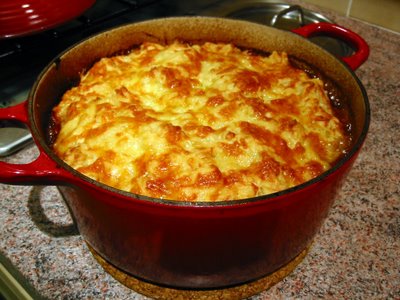 Andrew's call for stews as a new blogging event got me excited. Ever since the IMBB event stopped I was hoping someone would come up with a similar widely encompassing blog meme. It's nice to have one that would gather bloggers all over the world from all manners of persuation and basically have a big blogworld foodfest.
As per usual habit, I wanted to submit something Filipino but my husband emphatically said he doesn't want any stew that has tomatoes in it. I think the recent spate of pastas on our dinner table has done him in. That ruled out the Pinoy angle since all the stews without that offending ingredient I have already blogged before. So I've decided to do a simple beef stew but with its dumplings twisted into a muffin-like topping.
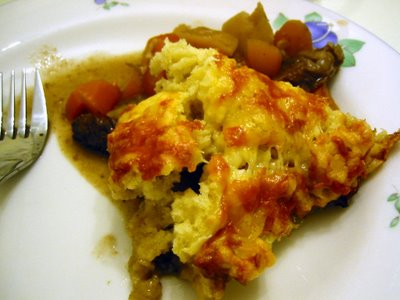
I had to do some adjustment to the recipe by Lesley Waters in the GoodFood magazine. For one, I thought it had too much sauce but the topping dough sucked up a lot of it so that was alright. Still the sauce was on the thin side so I noted in the recipe to add a little of the flour coating. Plus I had to add some Worcestershire sauce to correct its blandness and add mushrooms and reduce the carrots. There were too many changes that I think the beef stew was from my own recipe and I just kept the topping which was fab, by the way, and extremely yummy. It was looking particularly attractive with the cheese on top baked to a crisp golden colour.
Muffin-topped Beef Stew
500 g stewing steak - cut into chunks
2 Tbsp flour - seasoned with salt and pepper
2 Tbsp olive oil
1 large onion - chopped
2 medium carrots - peeled and chopped
2 large parsnips - peeled and chopped
200 g mushrooms - sliced
1 bay leaf
2 Tbsp tomato paste (optional)
1 Tbsp Worcestershire sauce
1 cup red wine
2 cups stock
*Topping:
225 g flour (about 1 1/2 cups)
1 Tbsp baking powder
140 g cheddar cheese - grated (about 1 1/2 cups)
2 Tbsp olive oil
2/3 cups milk
- Preheat oven to 150°C/fan 130°C/300°F.
- Toss beef in seasoned flour. Reserve 1/2 Tbsp of excess flour mixture.
- Heat the olive oil in a pot. Brown the flour-coated beef in high heat. If need be, do it in batches. Remove from pot once colour changes. Set aside.
- Lower heat and fry onions until soft and translucent - about 5 minutes.
- Add the carrots, parsnips, mushrooms. Cook 2 minutes.
- Stir in the reserved flour mixture and cook for a few seconds.
- Bring back beef in the pot. Stir and cook for 1 minute.
- Add bay leaf, tomato paste (if using), Worcestershire sauce, red wine, and stock.
- Bring to boil then put in oven. Bake for 1 3/4 - 2 hours of until the beef is tender.
- While the stew is in the oven, make the topping: Mix flour, baking powder, and half of the cheese.
- Combine milk and olive oil.
- Stir in milk mixture to the flour mixture to form a soft dough. If need be, add milk a little more at a time.
- Once the stew is done, remove the pot from the oven and raise the temperature to 190°C/fan 170°C/375°F.
- Spread (you may have to use your hand) on top of the stew and sprinkle the rest of the cheese on top.
- Bake for 15 minutes or until golden brown.
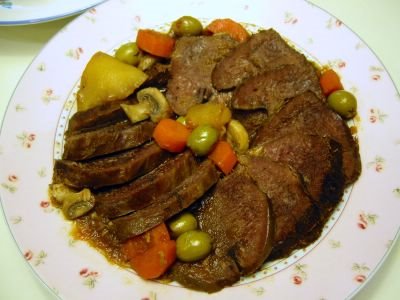 I know Cia encouraged us to make something different out of innards and offal. But I'm pretty helpless on this since I really do not cook offals that often. So you would have to forgive me if I make this thoroughly standard fiesta dish. Cia, as mentioned, of Pabulum is currently hosting the 9th edition of Lasang Pinoy.
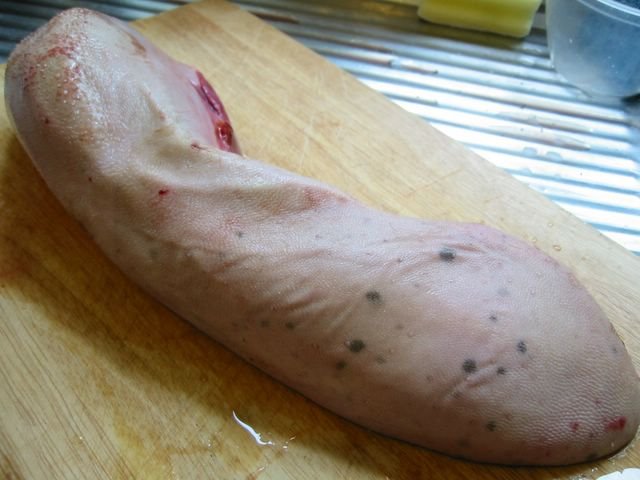
I had a lot of fun making this I must say. Starting with shopping for the tongue. Now I wouldn't find this in any ol' supermarket around here so off I went to Tooting (no kidding!) which has a very lively (and cheap) market. (I must blog about this place soon). Lots of fresh veggies and fruits plus this is where I get my fix on pork legs (properly cut), goat meat, whole baby back ribs, fresh chicken liver galore, and supermarket-rare offals - all in very reasonable prices. I went in a butcher shop and got this big boy of a tongue.
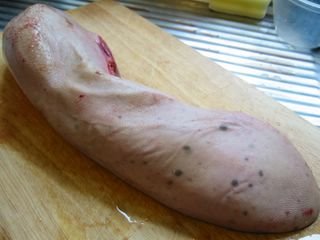
It was more than 14 inches long and ... well ... resembles something like ... oh never mind. Hehehe! Finding a big pot to fit it in was a challenge but I managed to unearth one of my moth-balling-seldom-used stock pots and just about fit it in. The removal of the skin was a joy - not! Reynaldo Alejandro's recipe from The Food of the Philippines (where I adapted this from) said to scrape or peel. Well I scraped and scraped and scraped but most of the white film is still there. So I had to slice it off trying to take off as little and as thinly as possible. After a prolonged struggle with a double dead tongue I finally got it all off! Hurray, on to the cooking!
The marinade was quite good, though, I noticed that you can substitute cooking wine or lemon for the vinegars. I bet it would taste great as well. The only problem I had was in the browning of the meat since the marinade has sugar hence the residue got burned. I had to wash up the pot pronto before continuing with the sauteing. I know I lost some good flavours with all those drippings washed away but it was burned and I don't want that to ruin the sauce. Other than that everything else was surprisingly a breeze. And I originally thought it would be horrific including the taste and texture of the meat. The first time I had this was when I was 12 years old and even then, even though I had a pretty fussy tastebud I loved that properly tenderly cooked lengua from a relative's wedding banquet. Finally, I was able to recreate it.
Lengua Estofado
1.5 kg beef tongue
*Marinade:
1 tsp peppercorns
1 bay leaf
3 Tbsp cider vinegar or white cooking wine
3 Tbsp soy sauce
3 Tbsp sugar
2 tsp sea salt
1 cup water
3 Tbsp oil
1/4 cup minced garlic
1/2 cup minced onions
1/2 cup finely chopped tomatoes
350 g potatoes - peeled, quartered and sliced
1 big carrot - peeled and sliced
salt and freshly milled black pepper
1/3 cup pimiento-stuffed olives
1 cup button mushrooms - halved or sliced
- Boil the tongue in a large pot of water for 20 minutes. (You may cut the tongue in half if it cannot fit). Drain from water and leave until cool enough to handle.
- Peel off the (usually white) outer skin. You may have to use a very sharp carving knife for this. Trim ends and wash.
- Combine all marinade ingredients and marinate the tongue for 1 hour or overnight.
- In a large pot heat the oil and brown the tongue on all sides. Remove and set aside.
- If the residue in the pot is not burned, use it with the same oil, if it is then clean the pot and heat it up again with about 2 Tbsp oil.
- Saute garlic for about 2 minutes in gentle heat - *do not* burn it.
- Turn up the heat and add in the onion, cook for about 4-5 minutes or until translucent.
- Add in the tomatoes and cook until soft.
- Put the tongue back in the pot together with the marinade.
- Add about 1/2 cup water. Bring back to boil and then simmer for 2.5 hours or until tender. Prick the tongue to let the liquid penetrate. You may add more boiling water a little at a time if it is drying out too much.
- Tip in the potatoes and carrots - cook for about 5 minutes.
- Add in the mushrooms and cook for another 5 minutes.
- Just before serving, remove tongue from sauce and slice crosswise. Arrange in a platter and ladle sauce and vegetables on top. Serve hot.
 This month's edition of Lasang Pinoy is hosted by the lovely Ting of Worldclass Cuiscene with a theme of 'pulutan'. When you hear 'pulutan' you should think along the same vein as the Spanish tapas. It's usually a dish that is specifically eaten with alcoholic drinks. Because of the close similarity, the concept might have come from the Spanish. (Please don't hold me hostage with that last statement, I'm just speculating from the obvious.) Due to the nature of its purpose, it's usually very spicy or at least very tasty to encourage you to drink more.
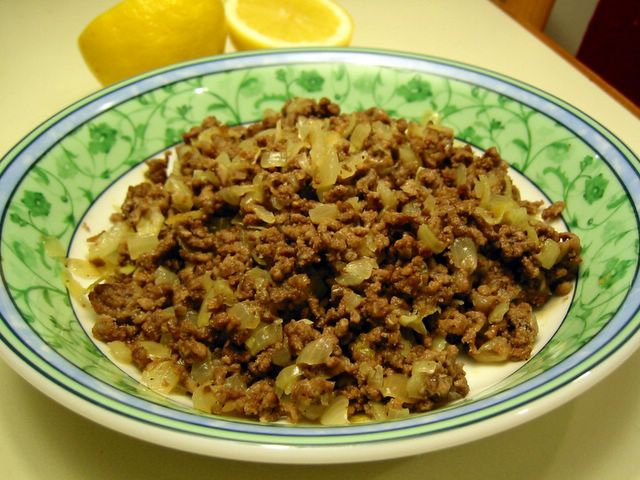
When the theme was announced it stupefied me since I haven't cooked pulutan to anyone. The one dish I wanted to try was sisig but pork cheek and/or ears are not normally what you see lying around the supermarket shelves here. The only other one I know is spicy adobong mani (garlic fried peanuts) which I think is so simplistic. Well Lasang Pinoy, in my opinion, deserves better than that. So what other recourse I had than call for help from the mga manginginom (drunken masters) I know. Good thing they came up trumps with this Kapampangan (Ilokano?) dish of bagis which was sooo tasty and so easy to do even a half-inebriated guy can whip this up in no time at all. A big thanks is in order to my BIL Derek and his friend Al Dayao (who gave the original recipe) for sharing this with us. Tagay na !
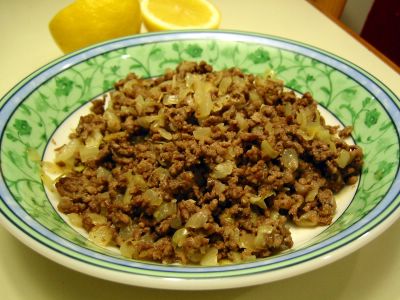 Bagis
Bagis
500 g minced beef
2-3 Tbsp lemon juice (from about 1 whole lemon)
1 1/2 cups chopped onions (about 2 medium)
1 tsp Tabasco sauce (or to taste)*
1 1/2 tsp sea salt
freshly milled black pepper
- Marinate the minced beef in lemon juice for 24 hours or overnight.
- Combine the marinated beef (including the marinade) and the rest of the ingredients in a pan and cook in medium heat. As it cooks, the beef will render its juice and fat so you do not need to put any water or oil.
- Once the mixture starts bubbling away, turn down heat and simmer until all the liquid has evaporated and the beef starts sizzling from its own fat. Dish up and serve with some stiff drinks. :p
*Note: You may use fresh chopped chillis or dried chilli flakes in place of the Tabasco.
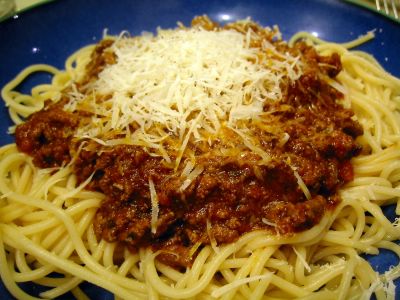 For several years now I've been trying to 'perfect' this popular Italian pasta sauce. Also called 'Spag Bol' or Spaghetti Bolognese (when served with that shape of pasta), I read in several books that Italians themselves wouldn't dream of serving this with spaghetti. They apparently use tagliatelle and after tasting this with a fresh version of that pasta, I could say I share their sentiment completely. This sauce can also be found in between lasagne sheets. Well, I've already got the Pinoy version of this plus even my son can come up with a bottled version (just brown some minced beef and pour in the bottled spaghetti sauce). But I fervently wanted to recreate the great taste of the meat sauce that we often get from Italian restaurants. This led me to looking it up in almost all the cookbooks and food magazines I come across. When I chanced upon the great collection of cookbooks in our local library, I was able to research on the authentic versions and derive a lot from it.
The word 'ragu' refers to slow cooked meat with little sauce. As with most traditional dishes there are a lot of variations even in Italy, not just from town to town but even probably from household to household. Some have all beef, have combinations of beef and pork, some use veal. Most use finely minced meat while others have diced ones. Versions also vary on whether or not to put vegetables, tomatoes, and milk or cream. The one thing that's universal in the more authentic recipes I found is the very slow and long cooking time, the use of wine (red or white), and spices. This version, which eventually met with the approval of my family, is one I culled from several cookbooks and the last one in particular from Anthony Worrall-Thompson who suggested Worcestershire sauce and anchovy sauce. It did the trick of adding a certain top note of yumminess to it. For one, my family loves its sauce very tomatoey therefore the chopped tomatoes and tomato puree are in. I also followed Delia Smith's and AWT's suggestion of browning the beef separately - it resulted in a more flavourful meat than if I did the browning right there in the stewing pot. I opted to use veggies in it because it imparts a slight sweetness, while the wine gives it body. Anyway, enough of my ramblings do try this and believe me just the aroma filling your kitchen would entice your housemates in.
Ragu alla Bolognese
1 kg minced beef (or half beef, half pork)
1 1/2 Tbsp olive oil
1 Tbsp minced garlic
2 medium onions - finely chopped
125 g pancetta or streaky bacon - finely diced
1/2 cup finely chopped carrots
1/2 cup finely chopped celery
1 Tbsp chopped fresh or 1 tsp dried thyme*
1 tsp dried oregano*
1 1/2 Tbsp chopped fresh or 1 tsp dried basil*
1/4 tsp nutmeg
1 1/2 Tbsp Worcestershire sauce
1 Tbsp anchovy sauce [optional]
1 bay leaf
1 cup white wine
2 x 400 g can of chopped tomatoes*
1/4 cup double concentrate tomato puree (tomato paste)
2 tsp sea salt (or to taste)
freshly milled black pepper
1/2 cup beef stock or water
butter or olive oil
125 g chicken liver - trimmed, washed and cut into 3/4-inch pieces
3 Tbsp single cream (light cream) [optional]
- In a pan (preferably non-stick), drizzle some olive oil and heat it up. Brown the minced beef in batches. Set aside.
- Wipe the pan and heat up some more olive oil or butter. Cook the chicken liver until well cooked and crumbly - about 5 minutes. Transfer to a bowl, then using a fork mash it up. If need be, finely chop some of the bits of liver that refuse to get mashed.
- In a big stewing pot, heat the 1 1/2 Tbsp olive oil and gently fry the bacon until it changes colour.
- Turn heat to low and add the garlic. Cook for 1 minute.
- Stir in the onion and cook gently for about 4-5 minutes or until translucent.
- Turn up the heat to medium and add the carrots and celery. Cook for about 3 minutes or until soft while stirring occassionally.
- Add the spices - basil, thyme, oregano. Stir and cook for about 1 minute or until aromatic.
- Tip in the browned minced beef and wine. Simmer until almost all the liquid has evaporated. Stir occassionally.
- Add the chopped tomatoes, concentrated tomato puree, bay leaf, nutmeg, Worcestershire sauce, anchovy sauce, chicken liver, salt, pepper, and stock.
- Bring to boil then bring down heat to lowest setting and simmer for *at least* 2-3 hours.
- If you have more fresh basil lying around, chop about 2 Tbsp of it and stir in the sauce.
- Add the cream and stir. Cook for another 1-2 minutes. Serve with freshly cooked al dente pasta such as spaghetti or tagliatelli.
*Notes:- In place of the basil, thyme, and oregano, you may use 1 Tbsp of Italian mixed herb.
- You may use 500 g passata in place of the chopped tomatoes and reduce the tomato paste to 1 Tbsp only.
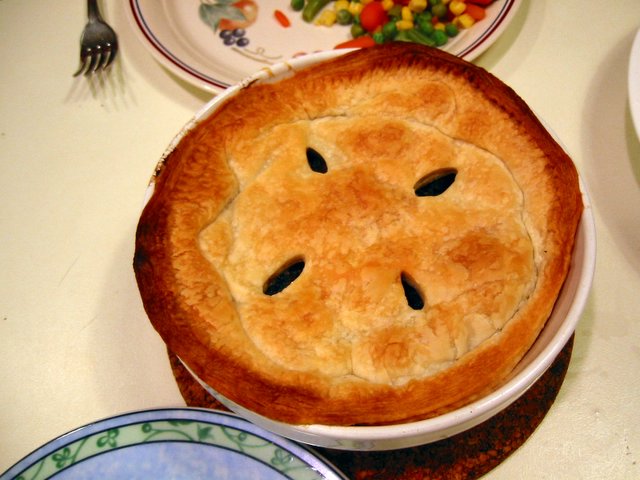
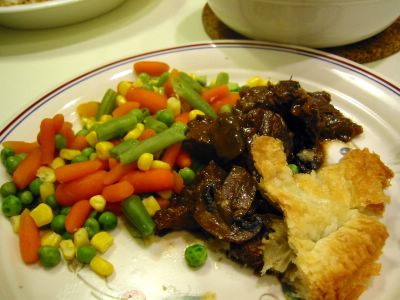 We had a box of mushrooms one time that needed to be used up fast. It was expiring a day later. Since I have a handy ready made puff pastry and some beef in the fridge, I thought I'd adapt this recipe I found from the BBC Food website. It suggested ale (a type of beer) in which the Guinness sitting in my pantry came in handy. Btw, Guinness beer is actually a 'stout' which is a class of ale beers. Whether you use an ale or stout or porter, it will do well in this dish.
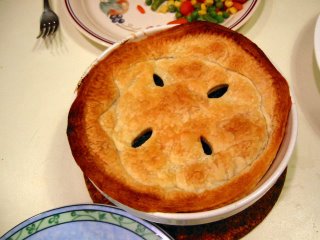
As for the pastry, I didn't have any pie funnel or pie vent so I just cut some holes on the top to let the steam rising from the meat filling out so as not to make the pastry soggy. It wasn't in the instructions I just thought of it as common sense. And it worked! :)
 Beef, Ale and Mushroom Pie
1 kg stewing beef - cut into roughly 1-inch squares
1 Tbsp vegetable oil
1 medium onion - diced
1 Tbsp flour
1 Tbsp mushroom ketchup (optional)
1 Tbsp Worcestershire sauce
1 Tbsp chopped fresh thyme or 1 tsp dried thyme
2 Tbsp chopped parsley or 1 tsp dried parsley
1 tsp English mustard
1 bayleaf
1 tsp sea salt
freshly milled black pepper
2/3 cup beef stock
1/2 cup ale (or Guinness)
250 g mushrooms - sliced
450 g puff pastry
- Heat oil in a heavy bottomed pot and saute onion gently until translucent (about 5 minutes).
- Stir in beef and cook until browned.
- Add in the flour, cook until dark brown (about 1 minute).
- Mix in the mushroom ketchup, Wostershire sauce, thyme, parsley, bay leaf, salt and pepper.
- Slowly add beef stock and ale, bring to boil.
- Add mushrooms and lower heat to simmer gently until beef is tender (about 1 1/2 hours). If it is drying out too much add hot water or beef stock a little at a time.
- Preheat oven to 400°F/200°C/fan 180°C/gas mark 6.
- Remove beef from heat, skim off any fat, adjust seasonings and add more fresh chopped parsley if available.
- Roll out puff pastry and invert the pie dish(es) to be used onto it. Cut out a cover for the dish using the shape of the pie dish as outline. If you do not have a pie funnel, cut out holes in the pastry cover to let the steam from the filling to escape and not make the pastry soggy.
- Put in the whole lot (beef + sauce) in a medium sized pie dish or individual pie dishes. Cover pie dish with the prepared pastry and trim edge by hand or with tines of a fork.
- Bake for 20-25 minutes or until the pastry is well risen and golden brown.
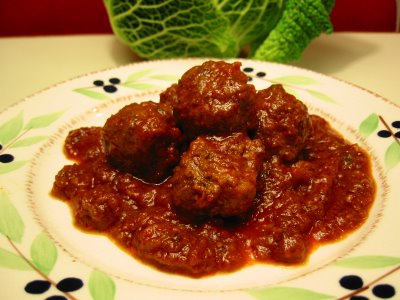 Not to be confused with my earlier recipe of Almondigas, this is one of your regular tapas bar staple. Albondigas means meatballs lightly fried in oil then simmered in tomato sauce, wine, and spices. I made this specifically for the wine tasting meet I had with several charming London food bloggers which the lovely Jeanne and Nick generously hosted in their East London house. Stupidly, I forgot to bring my camera so you'll just have to head over to the other participant's blogs for the pictures. Gosh, I missed taking pictures of all the wonderful food and wine we had.
As for this, the original recipe (adapted from Easy Tapas by Julz Beresford) called for lots of ground cloves which I discovered I wasn't particularly fond of. So I adjusted it to have that as optional afterall the sauce was marvellous what with that wine, paprika and lots of garlic and onions infused in the tomato sauce. This is usually serve warm in tapas bars and it reheats very well. Distribute around forks or toothpicks for a little pica-pica and have a red Rioja with it. Fab!
Albondigas
(Meat Balls in Tomato Sauce)
150 g minced veal or beef
150 g minced pork
1/2 small onion - finely chopped
2 garlic cloves - finely minced
1 tsp lemon juice
2 Tbsp chopped flat leaf parsley
1/2 tsp ground nutmeg
pinch of ground cloves (optional)
30 g dried breadcrumbs
1 egg - beaten
1 Tbsp single cream (light cream)
1/2 tsp ground sea salt
freshly ground pepper
plain flour for dusting (optional)
2 Tbsp olive oil
*Sauce:
1 x 400 g can chopped tomatoes
1/2 cup white wine
2 garlic cloves - finely minced
1/2 small onion - finely chopped
1/2 tsp smoked sweet Spanish paprika
1 bay leaf
ground sea salt
- Combine the breadcrumbs, cream, and beaten egg in a bowl. Leave for about 10-15 minutes until the breadcrumbs has softened and absorbed the liquid.
Add in the meats, lemon, onion, garlic, parsley, nutmeg, cloves, salt and pepper. Mix well.
- Form into 1-inch sized balls, roll in the flour (if using), and pan fry in batches in a pot with hot olive oil. Brown the meatballs on all sides.
- When you've fried them all, you may have to clean/wash the pot if you used flour for dusting most of which would most likely to be a little burned by now and you don't really want a burnt taste in your sauce. Otherwise, just carry on - adding more oil if needed.
- *For the sauce: briefly saute the onion and garlic in the same pot where you fried the meatballs. Add the rest of the ingredients including the fried meatballs.
- Bring to boil then lower heat and simmer for 1 hour, stirring from time to time to prevent scorching at the bottom. The sauce should be quite liquid so add more water a little at a time if needed. Serve warm.
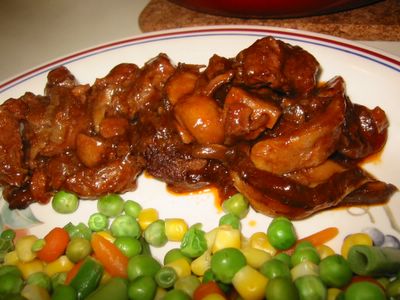
We've been hankering for some beef stew for quite sometime. But not wanting to make mechado again, I rummaged thru my magazine cutouts to try out a new recipe. Out came this stew with lots of stout beer and mushrooms. This is adapted from Sophie Grigson's that was posted in The Sunday Times Cookery Cards. I don't have a clue on what year this came out.
Beers are very broadly classified to ales and lagers. Under types of ales is stout beer which is characterised by its dark colour and foaminess. Good examples of this are Guinness, Murphy's, and Mackeson's XXX. It is best served chilled not ice cold. The dark color comes from the large proportion of roasted barley in it. It is said that Guinness is proven to have a lot of therapeutic value. Even my own GP (doctor) strongly suggested to me to drink it regularly when I became anemic after my last childbirth because apparently it is very rich in iron. That news was well received by my husband who promptly went to Tesco's and bought several packs of the thing. Although it was technically for me, I distinctly remember he drank more than I did. ;).
This recipe is very easy to follow and once you've put them all in a casserole in an oven, you can put your feet up and wait in your merry way. The resulting dish was quite good although I think it lacked something. Maybe I would add some Worcestershire sauce next time. Actually I spied another similar recipe with less beer and more flavourings and veggies so maybe I'll try that later.
Beef, Guinness and Mushroom Stew
1 kg shin of beef (or any stewing cuts) - sliced into 1 1/2 inch cubes
seasoned flour
1/4 cup butter
2 Tbsp oil
2 onions - roughly chopped
125 g button mushrooms
720 ml (1 1/4 pints) Guinness or other stout beer
2 Tbsp double concentrated tomato puree (tomato paste)
1/2 Tbsp sugar
1 bay leaf
bouquet garni
225 g fresh shiitake mushrooms (or any flat fleshy mushrooms) - sliced thickly
1 tsp sea salt
freshly ground black pepper
- Preheat oven to 170°C/fan 150°C/325°F/gas mark 3.
- Toss beef in seasoned flour. (Seasoned flour is all purpose flour mixed with salt and ground pepper. Suggested proportion is - 1/2 cup flour + 1/2 tsp fine salt + ground pepper).
- Heat a third of the butter plus 1 Tbsp oil in a frying pan and brown the meat briskly in batches, adding more oil if needed. Transfer in a oven proof casserole.
- Add a third more of butter and saute onions until lightly browned. Add button mushrooms, saute lightly. Transfer fried onion and mushrooms to the casserole.
- Pour Guinness into the pan and bring up to boil while scraping the residues from the frying. Stir in tomato paste and sugar. Pour over the casserole.
- Add bouquet garni. Season with salt and pepper. (you can make fresh bouquet garni by tying together with a string the following - bay leaf, 1 sprig of rosemary, 2 sprigs parsley, 2 sprigs thyme)
- Cover and cook in the oven for 2 1/2 - 3 hours until meat is tender. Check occassionally. If it is drying up too much add a little hot water.
- Saute the fresh shiitake mushroom in the remaining butter. Stir into the casserole and return to the oven for 5 minutes.
- Discard the bouquet garni, adjust the seasoning and serve.